R & C Inspectors does not provide solar panel inspections or performance testing. If a solar-specific evaluation is needed, we recommend contacting a qualified solar contractor.

 617-615-9559

Fill up the form and we will reach out to help you set up a suitable time slot for your property inspection.

A solar panel on the roof can impact a home inspection, but often in ways homeowners do not expect. A standard home inspection does not include a full solar panel inspection. Instead, the inspector evaluates how the solar system may affect the roof, attic, and visible electrical components, then documents any limitations or concerns.
If you are buying or selling a home with solar panels, understanding what inspectors do and do not evaluate helps set clear expectations, avoid surprises, and support informed decisions, especially when the inspection is focused on roof condition and accessibility.
Solar panels are now a common feature on many homes, especially in active real estate markets. Buyers often worry that panels may hide roof damage or leaks, while sellers are concerned they could complicate the inspection or raise red flags during a sale.
At the center of these concerns is one key question: are solar panels evaluated the same way as the rest of the home during an inspection?
The answer comes down to scope. A home inspection focuses on the home’s structure, safety, and visible systems. Solar panels sit in a gray area. Inspectors observe how they affect the roof and related components, but they do not perform a full solar system evaluation or performance testing.
Solar panels are not part of a full solar panel inspection during a typical home inspection.
A home inspection is visual and noninvasive. Inspectors do not remove panels, disconnect wiring, or test energy output. Those steps require a licensed solar professional and specialized solar testing tools.
What inspectors do instead is note how the presence of solar panels affects the roof, attic, and electrical safety. If something looks unusual or unsafe, it is documented with a recommendation for further review, similar to how inspectors document other commonly overlooked areas.
This distinction matters. It keeps expectations clear and protects both the buyer and the inspector.
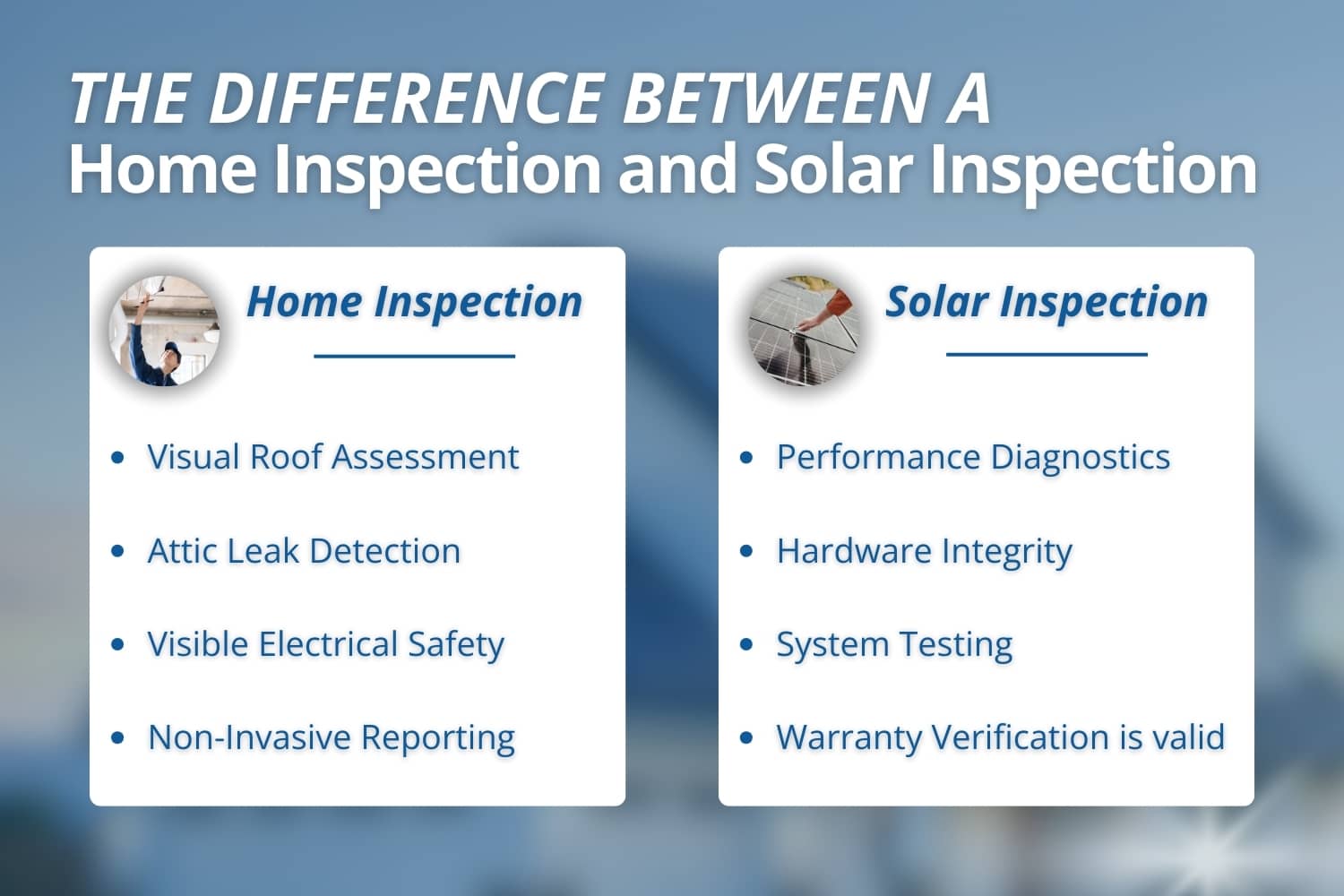
Even though inspectors do not test the solar system itself, solar panels still influence several parts of the inspection. This is because panels interact with the roof surface, require mounting penetrations, and connect into the home’s electrical system.
Inspectors focus on what they can see and what is directly related to the home’s condition and safety. This includes:
Signs of leaks or staining
Damaged shingles or tiles near mounting points
Flashing around penetrations that can be seen
If panels cover large sections of the roof, the inspector will note that those areas were not visible.
Where visible, inspectors check that mounting hardware appears secure and properly flashed. Poor flashing is a common source of roof leaks, especially at penetrations and transitions.
Inspectors do not confirm whether the mounts meet manufacturer specifications or local solar installation standards, but visible concerns are documented so the client can decide whether additional review is needed.
Inside the attic, inspectors look for clues that may suggest roof problems, such as:
Attic findings often provide insight when roof areas are blocked by panels. This matters when panels block roof visibility, because attic conditions can sometimes reveal active leaks or past moisture issues even when the roof surface cannot be seen directly, especially when there are ceiling stains or water damage indicators.
Solar panels can limit what an inspector can see during a roof inspection. Inspectors cannot walk on panels, lift them, or remove mounting hardware, so when panels cover large areas of the roof, the sections beneath them are considered inaccessible.
This is a standard inspection limitation, not a defect or red flag, and it is clearly noted in the inspection report to explain which roof areas could not be visually evaluated at the time of inspection.
| Roof Area | What the Inspector Can Check | What Is Limited |
|---|---|---|
| Open roof areas | Shingle or tile condition, flashing, visible damage | None |
| Areas near panel edges | Signs of leaks, lifting materials, flashing issues | Partial visibility |
| Roof sections under panels | Not accessible for visual inspection | Full visibility blocked |
| Attic below panels | Staining, moisture, structural indicators | Cannot confirm the exact roof surface condition |
| Mounting points (visible) | General condition and signs of leaks | Installation quality and sealing details |
These limitations are included in the inspection report to set clear expectations for buyers and sellers. When large portions of the roof are covered by solar panels, a separate roof or solar evaluation may be recommended to better understand the condition of areas that could not be visually inspected.
Solar panels do not automatically create problems during a home inspection. Many homes with solar systems pass inspections without issue. However, inspectors may note certain conditions related to how the panels were installed or how they affect the roof and surrounding areas.
Inspectors sometimes flag concerns related to:
These findings do not mean the home is unsafe or that the solar system is failing. They help identify areas where additional evaluation or maintenance may be appropriate before moving forward.
Preparation helps the inspection go smoothly, especially when solar panels are involved.
Provide solar installation paperwork if available
Share system age and ownership details
Make the attic and electrical areas accessible
Clear documentation helps buyers understand the system and reduces follow-up questions. If paperwork is not available, sellers can still help by sharing what they know about the installer, the approximate installation date, and whether the system is owned or leased.
Ask whether the system is owned or leased
Review the inspection report notes carefully
Budget for a separate solar panel inspection if recommended
Being informed allows you to move forward with confidence.
A dedicated solar panel inspection may be appropriate in certain situations. This type of inspection is typically completed by a licensed solar professional and focuses on system function, safety, and performance.
These include:
Concerns about system performance
Warranty or insurance requirements
Older systems with limited documentation
Signs of roof leaks near panel locations
Real estate negotiations involving solar conditions
In these cases, buyers may request confirmation that the system is operating properly and that any transfer documents, warranties, or lease terms are in order. A solar specialist can review system components and performance details that are outside the scope of a home inspection.
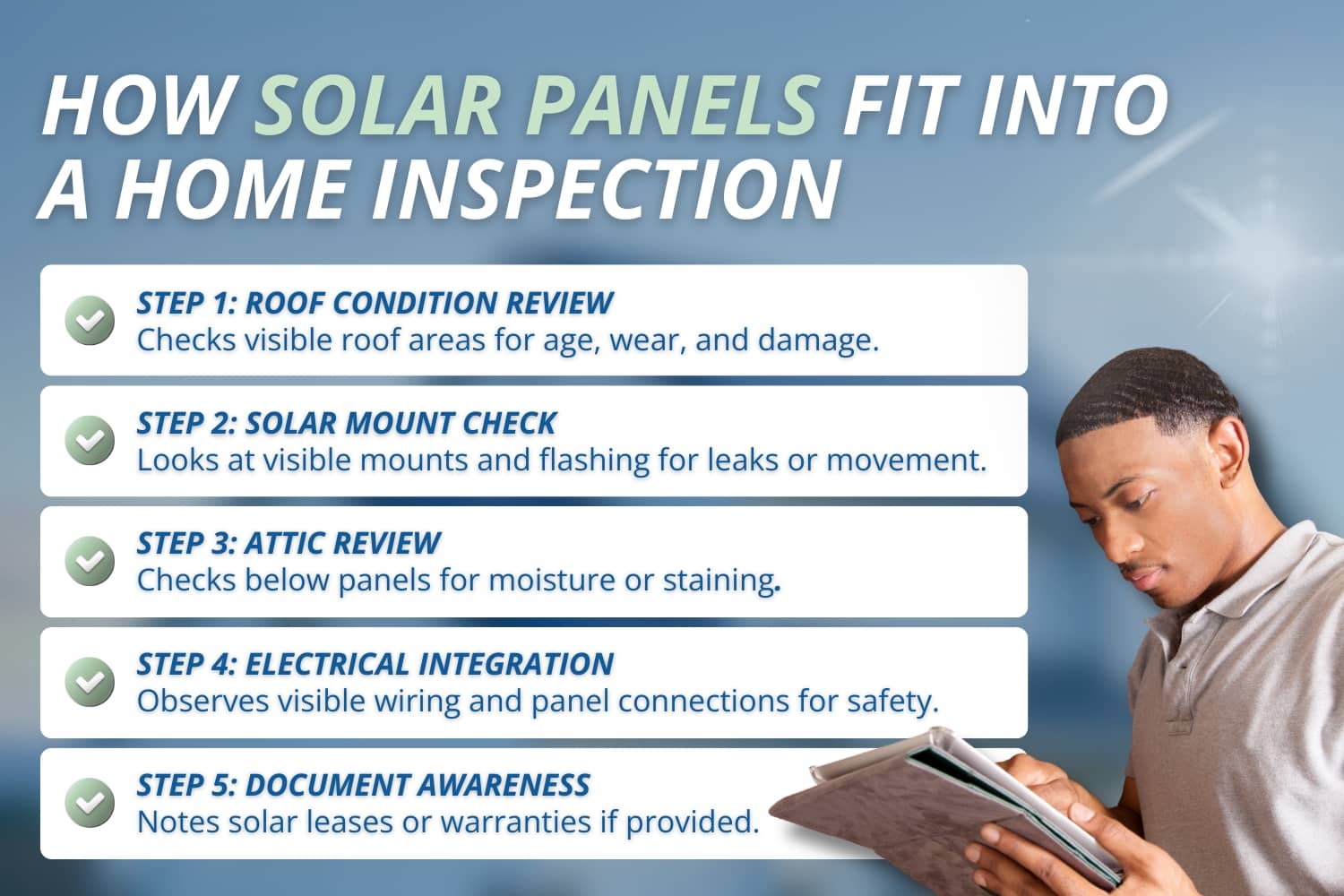
Inspection reports clearly explain what was observed and what was not.
When solar panels limit visibility, inspectors note:
Areas of the roof that were inaccessible
Any visible concerns
Recommendations for further evaluation if needed
This transparency helps buyers, sellers, and agents understand the scope of the inspection and decide next steps.
Solar panels can change how parts of a home inspection are performed, especially when they limit access to certain roof areas. Understanding what inspectors do and do not evaluate helps buyers and sellers set realistic expectations, avoid confusion, and make better decisions during a real estate transaction.
Solar panels do affect a home inspection, mainly by limiting roof visibility
A home inspection is not a full solar panel inspection
Inspectors focus on roof condition, safety, and visible components
Limitations are normal and documented in the report
Separate solar inspections may be recommended in some cases
Understanding these points removes uncertainty and helps everyone involved in the transaction.
Do solar panels hide roof damage?
Solar panels can block visual access to portions of the roof, which may prevent inspectors from seeing the roof surface beneath them. Inspectors look for related signs of damage from accessible areas and the attic, but hidden sections cannot be fully evaluated without removing the panels, similar to other inspection visibility limits that can come up in real inspections.
Can a home inspection fail because of solar panels?
Home inspections do not pass or fail a property. Inspectors document observed conditions and limitations so buyers can make informed decisions, and those findings are communicated through the inspection report.
Are leased solar panels inspected differently?
The inspection process is the same whether the solar panels are owned or leased, because the inspection remains a visual review of the home’s accessible components. Inspectors still provide findings and note limitations, then include recommendations for routine maintenance or repairs when applicable.
Should I inspect the roof before installing solar panels?
Yes, inspecting the roof before installation helps confirm it is in good condition and reduces the risk of leaks or premature roof repairs after the panels are installed. In many cases, additional tools can help identify moisture issues that might not be obvious during a basic visual review.
Do insurance companies require solar inspections?
Some insurance companies may request additional documentation or specialized evaluations depending on the system and coverage, and requirements can vary by provider. When insurance-related inspection needs come up, they may fall under broader insurance inspection considerations rather than a standard home inspection scope
If you are buying or selling a home with solar panels, a professional home inspection helps clarify roof condition, safety concerns, and any inspection limitations. Understanding what can and cannot be visually evaluated supports informed decisions during the transaction.
R & C Inspectors provides clear, thorough home inspections with straightforward reporting. If you are scheduling a home inspection, contact R & C Inspectors to discuss your inspection needs before the appointment.