Fill up the form and we will reach out to help you set up a suitable time slot for your property inspection.
What Does Mildew Smell Like Inside Your Home?
By Admin Friday February 20, 2026
If you are asking what mildew smells like inside your home, the short answer is this: it smells musty, damp, and stale, like wet cardboard or an old basement. That odor is usually a sign that excess moisture is present somewhere it should not be.
When moisture lingers indoors, problems can develop quietly behind surfaces, under flooring, or in hidden spaces.
In this guide, we will explain what that smell means, what causes it, and what you should do next as a homeowner.
It is not sharp like a chemical smell or sour like spoiled food. Instead, it feels heavy and musty, lingering in the air even after you open windows or spray air freshener.
What you are actually smelling are Microbial Volatile Organic Compounds, often called mVOCs. These are gases released as mildew feeds on organic materials such as drywall paper, wood framing, carpet backing, or dust. As the growth spreads, it releases these compounds into the air, which is why the odor can seem stronger over time.
Inside a home, the smell is often more noticeable in:
Closets and storage rooms
Bathrooms with limited ventilation
Basements and crawlspaces
Cabinets under sinks
Rooms that feel damp or humid
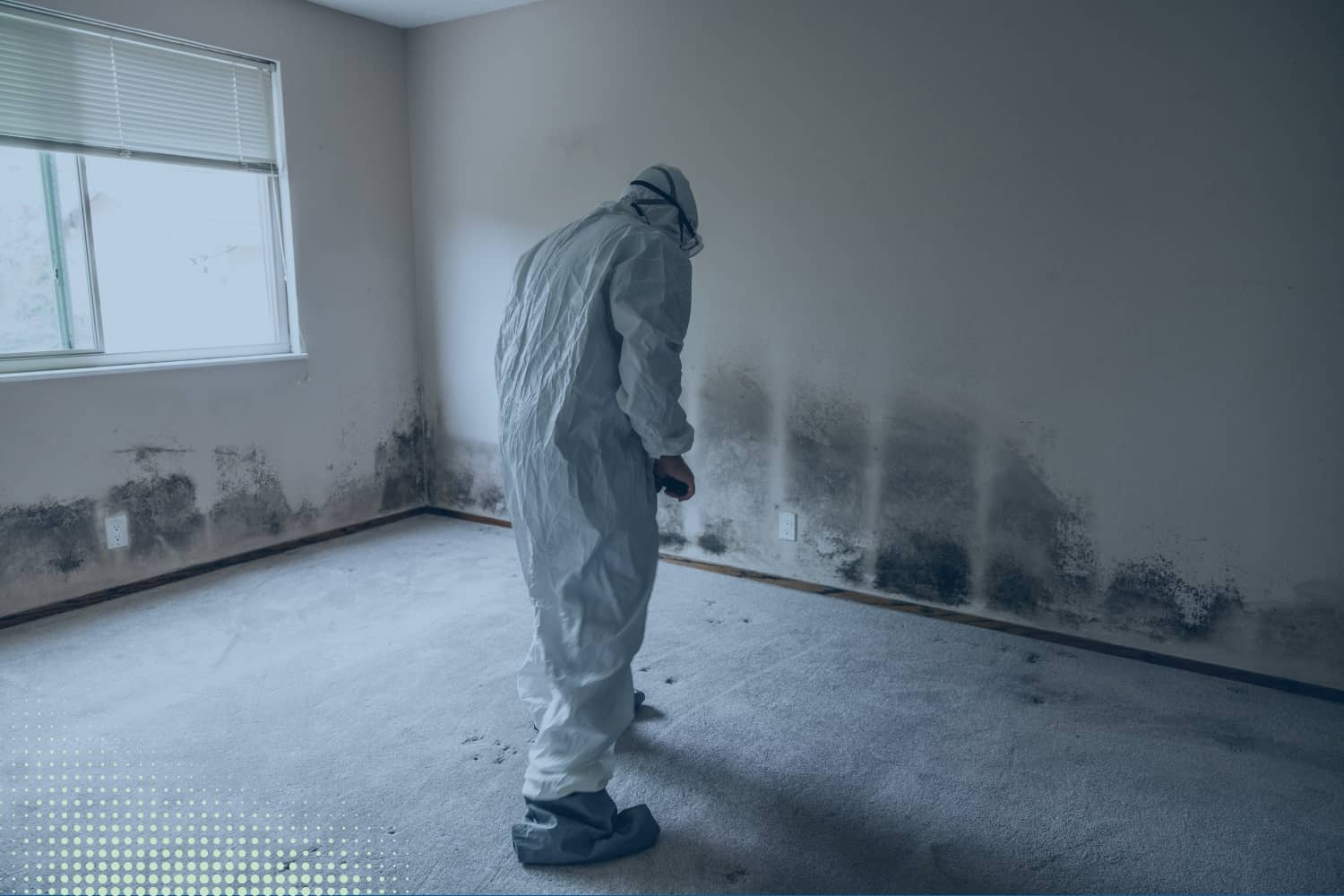
Building materials and soft surfaces can absorb moisture. Once they stay damp long enough, mildew can begin to grow and release odor into the air. If you clean the room but the smell quickly returns, that is a strong sign the source is hidden somewhere inside the home rather than on the surface.
Why Does Mildew Smell Stronger Inside Your Home?
When mildew is visible on a surface, you can usually clean and dry it. But when it is hidden inside the home, the moisture often remains.
While inspectors don’t generally open up walls or look beneath flooring, damp materials behind walls, under floors, or in ceilings can keep releasing odor into the air. As air moves through vents, outlets, and door gaps, it spreads that musty smell throughout the house.
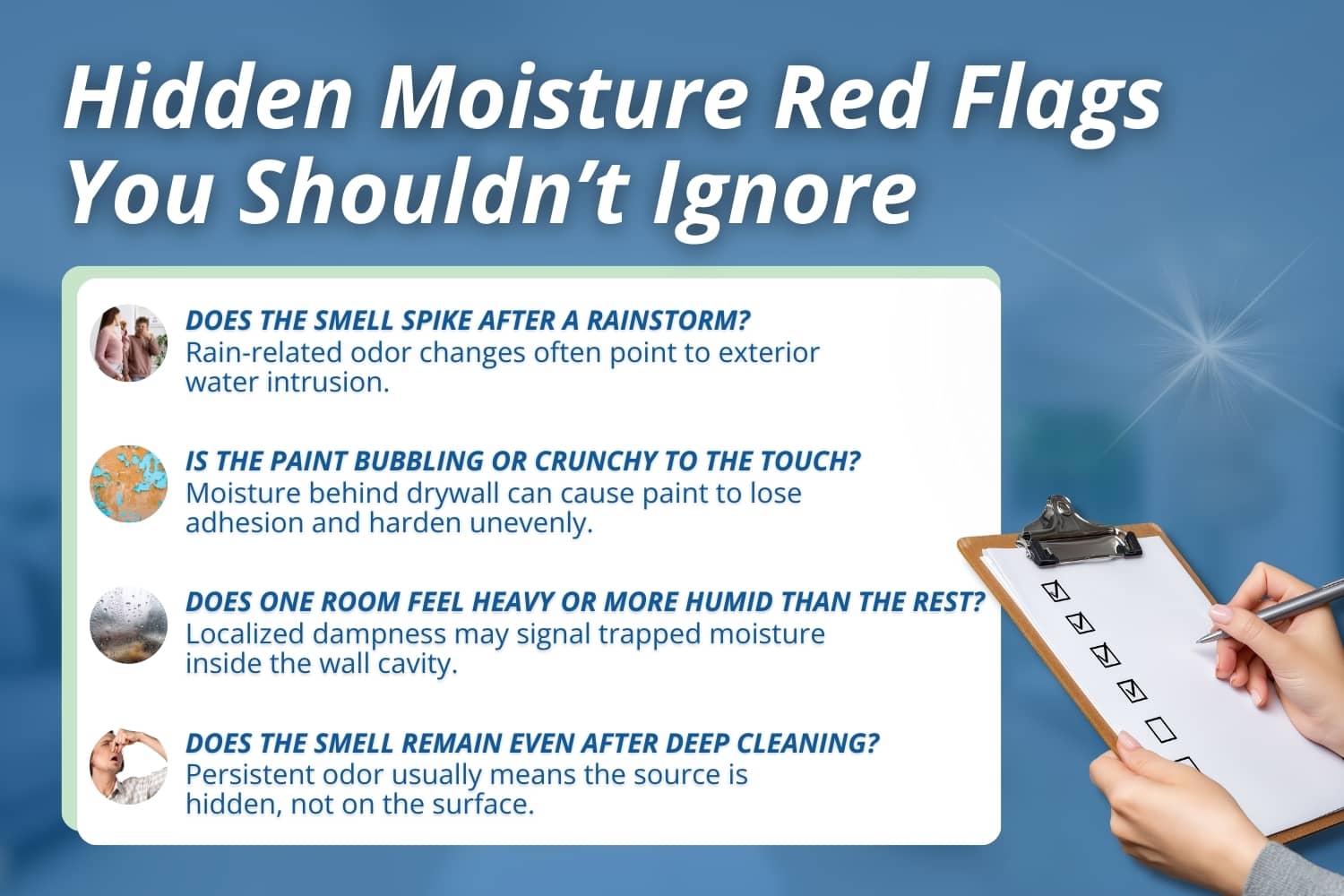
Many homeowners notice the smell after heavy rain or during humid weather. Small exterior openings can let in moisture over time, leading to odors that seem to come from nowhere inside the home.
What Causes Mildew to Grow Inside Your Home?
Mildew needs two things to grow: moisture and organic material. Inside a home, materials like drywall, paper, wood framing, carpet backing, and dust provide a steady food source. When excess moisture is introduced, mildew can begin to grow and release a musty odor into the air.
Here are the most common causes inside a home.
Small Plumbing Leaks
Slow leaks are often the biggest culprit. A loose pipe connection behind a shower or sink can drip for weeks without being noticed. The water may not reach the floor, but it can soak nearby materials and create damp conditions that allow mildew to grow.
Pressurized plumbing lines can also release a fine mist into enclosed spaces, raising humidity levels without forming a visible puddle.
Even small openings can allow rainwater to enter during storms. Once inside, moisture can become trapped in ceilings, floors, or exterior-facing walls, especially if drying is limited. Bubbling paint or soft trim can be early warning signs.
Flooding or Past Water Damage
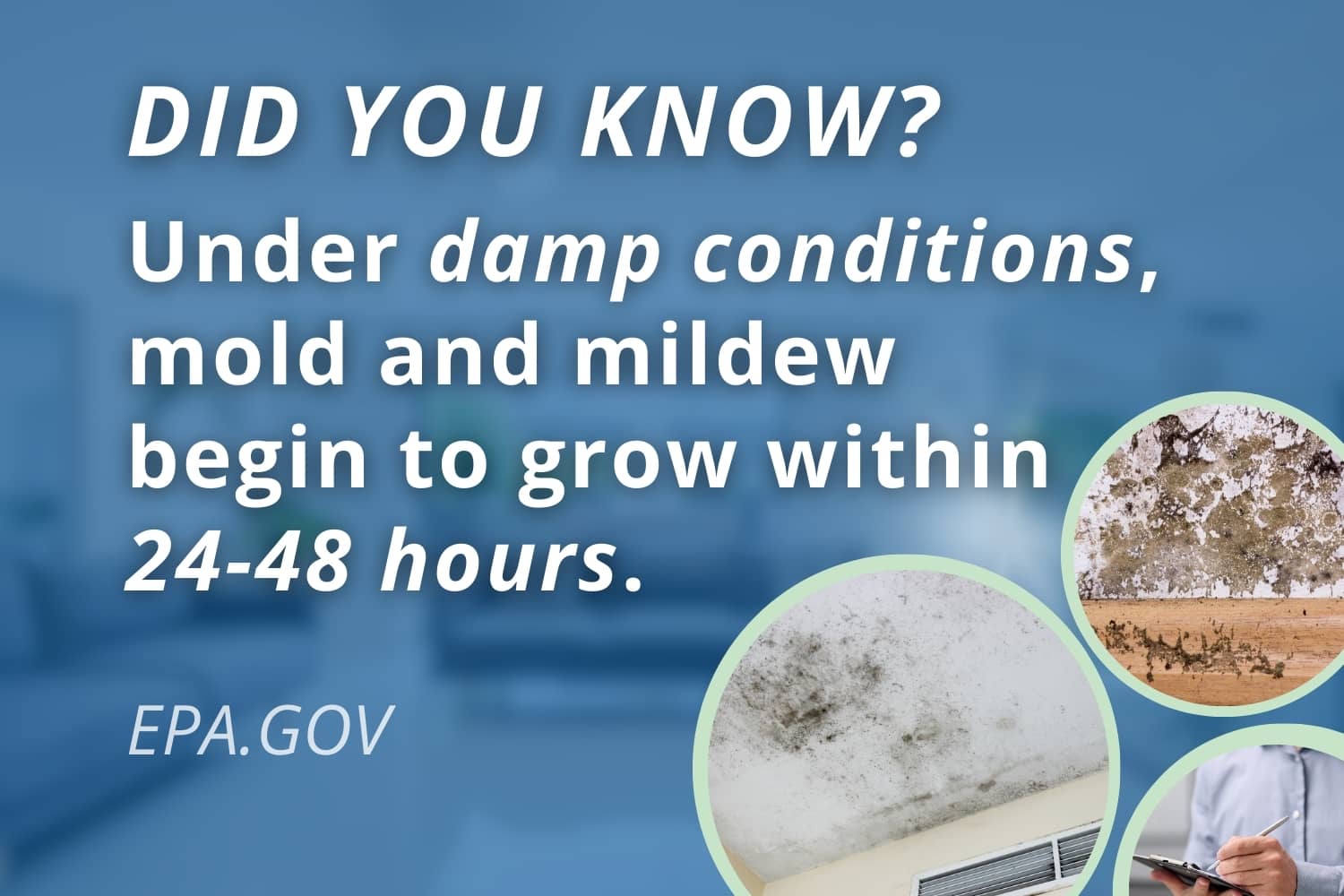
If part of the home was soaked during a storm or a pipe burst and was not fully dried within 24 to 48 hours, mildew can begin forming. Even if surfaces feel dry, moisture may remain hidden inside insulation or beneath flooring.
That trapped dampness can continue to fuel mildew growth long after the original water event has passed.
High Indoor Humidity
The EPA recommends keeping indoor humidity below 60 percent. Ideally, it should stay between 30 and 50 percent. Bathrooms without proper ventilation, poorly sealed crawlspaces, and unvented dryers can raise humidity levels inside walls.
Over time, that moisture can lead to mildew growth even without a major leak.
This is driven by vapor drive. When the air inside a room is warm and humid, the moisture seeks out cooler surfaces. Through a process called thermal bridging, moisture condenses on the backside of the drywall near cold exterior studs. This creates “hidden” dampness that supports microbial proliferation even if there is no liquid plumbing leak.
Where is the Smell Coming From Inside Your Home?
It is not always easy to pinpoint the source of a musty smell inside your home. Sometimes it lingers in the air without visible stains or obvious damage. Hidden moisture in ceilings, floors, cabinets, or exterior-facing walls often leaves subtle clues if you know what to look for.
Use the table below as a guide to help determine whether the odor may be coming from a hidden area inside the home rather than from a surface issue.
Warning Sign
What It Might Mean
Why It Matters
Smell is stronger in one area or room
Moisture may be trapped behind drywall, under flooring, or inside cabinetry
Localized odor often points to a hidden leak or exterior water intrusion
Odor increases after rain
Water may be entering through siding, roofing, or window flashing
Rain-related odor spikes suggest an exterior moisture source
Wood may be absorbing moisture from nearby materials
Soft trim can indicate prolonged dampness and possible structural damage
One room feels more humid than others
Moisture levels may be elevated in that section of the home
Localized humidity differences can signal hidden moisture buildup
Smell returns quickly after cleaning
The source is not on the surface
Persistent odor usually means moisture is trapped somewhere inside the home
If you notice one or more of these warning signs, it is important to investigate further instead of masking the smell. Musty odors rarely disappear on their own when moisture is still present.
The sooner you identify and correct the source of dampness, the easier and less expensive the repair is likely to be. Acting early helps protect your home’s structure and indoor air quality before the damage spreads.
Is Mildew Inside Your Home Dangerous?
Mildew is generally less severe than black mold, but it still signals a moisture problem inside the home.
The bigger concern is not just the odor. It is what ongoing moisture can do to your home over time.
Ongoing dampness can:
Weaken drywall
Rot wood framing
Damage insulation
Affect indoor air quality
Some people may experience irritation, coughing, or allergy symptoms in damp indoor environments.
More importantly, structural damage becomes more expensive the longer moisture is allowed to continue.
That is why a persistent musty smell inside your home should not be ignored.
Can You Remove Mildew Inside Your Home Yourself?
Surface mildew can sometimes be handled with basic cleaning. But when the smell is coming from hidden areas inside your home, the situation is more complex and usually requires more than a surface fix.
What You Can Do for Surface Mildew
Clean visible mildew with antimicrobial cleaners (not just standard soap)
Dry the area completely after cleaning using high-velocity fans
Drywall and flooring can trap moisture beneath the surface
Cutting a small hole will not solve the active moisture problem
Odor will return if the source is not fixed
The Most Important Step
Identify and stop the water source first
Check for plumbing leaks, roof issues, or siding gaps
Address high indoor humidity if present
Professional inspection often uses Infrared (IR) Thermography. Because damp drywall is cooler than dry drywall due to evaporative cooling, an IR camera can “see” the moisture pattern inside the wall without cutting a single hole.
For minor humidity problems, better ventilation or a desiccant dehumidifier may help. But if moisture remains trapped inside the home, it can lead to structural rot:
Ongoing dampness weakens building materials
Hidden moisture increases the risk of recurring odors
A professional inspection using moisture meters is often the safest way to prevent ongoing damage and recurring mildew smells.
When Should You Call a Professional?
You should consider a professional inspection if:
The odor lasts more than a few days
You recently had a leak or storm damage
Paint is bubbling, or the drywall feels soft
Multiple rooms are affected
You cannot locate the moisture source
A trained inspector can determine whether the problem is surface-level or inside the wall cavity.
Early inspection can prevent more extensive structural repairs later.
How Professionals Find Hidden Mildew Inside Your Home
Professionals use tools that go beyond visual inspection to locate hidden moisture inside the home.
These may include:
Moisture meters to detect damp drywall or flooring by measuring elevated moisture levels beneath the surface
Thermal imaging cameras to identify temperature differences that often signal trapped moisture
Targeted inspections to check specific areas without opening large sections of walls or ceilings
These tools help locate hidden moisture without unnecessary demolition.
In many cases, catching the issue early means only a small section of drywall or material needs repair instead of a much larger and more costly replacement.
Related Questions
Does mildew always mean there is a leak? Not always. Mildew can form simply from high indoor humidity, especially in bathrooms, kitchens, or poorly ventilated spaces. However, if the smell is strong, localized, or coming from inside a wall, it often points to trapped moisture from a plumbing leak or exterior water intrusion.
What is the difference between mildew and mold smell? Both mildew and mold produce a musty odor, but mold tends to smell stronger and more pungent. Mildew often has a lighter, damp, stale scent. Because the smells are similar, a professional inspection may be needed to determine what type of growth is present.
Can high humidity alone cause mildew inside walls? Yes, sustained indoor humidity above recommended levels can lead to condensation inside wall cavities. Over time, that moisture can support mildew growth even without an obvious leak. Proper ventilation and humidity control are key to preventing this type of hidden problem.
Conclusion
If you are wondering what mildew smells like inside your home, your nose may already be giving you the answer.
A musty, damp odor is not just unpleasant. It is often a warning sign. The key is to act early.
Finding and correcting moisture quickly can prevent structural damage and costly repairs. If you are unsure where the smell is coming from, a professional home inspection can provide clear answers and peace of mind.
R&C Inspectors provides thorough home inspection services throughout Greater Boston and the surrounding areas. If you suspect hidden moisture in your home, consider scheduling an evaluation to identify the source before the damage spreads further. Early action protects your home, your air quality, and your investment.