
- Book your home inspection online today and save $25 on your next inspection! BOOK NOW!
-
 617-615-9559
 617-615-9559
Fill up the form and we will reach out to help you set up a suitable time slot for your property inspection.
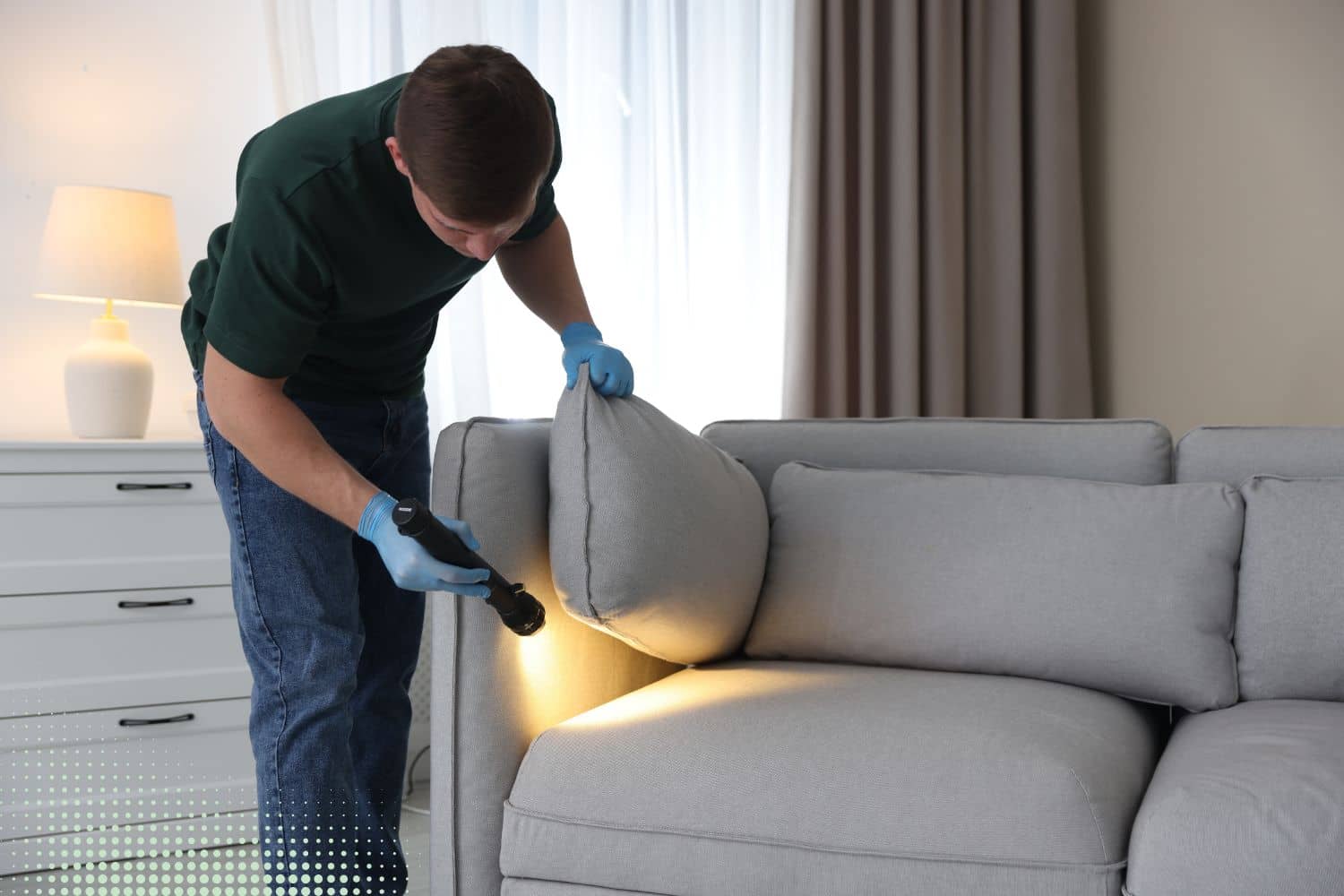
The best pest prevention tip is the simplest one: stop pests before they get inside. Once they are in, removal costs time and money. As certified home inspectors serving Greater Boston, the team at R&C Inspectors sees the results of missed prevention steps on nearly every pest inspection we run.
The good news is that most entry points, moisture sources, and attractants are fixable with basic maintenance. This guide walks you through the pest prevention tips that work, season by season, room by room, and perimeter to perimeter.
Greater Boston’s climate creates year-round pest pressure that is different from warmer regions. Cold winters drive rodents indoors. Humid summers increase ant and mosquito activity around foundations. Older housing stock, crawl spaces, and aging soffits give pests easy access that newer construction does not.
Boston homeowners should expect seasonal shifts, not seasonal breaks, from pest activity.
|
Season |
Common Pests |
What They Are Doing |
|
Spring (Mar–May) |
Carpenter ants, termites, mice |
Emerging from overwintering sites, swarming, expanding colonies |
|
Summer (Jun–Aug) |
Mosquitoes, wasps, ants |
Breeding in standing water, nesting in eaves and voids |
|
Fall (Sep–Nov) |
Rodents, cluster flies, cockroaches |
Seeking indoor warmth before temperatures drop |
|
Winter (Dec–Feb) |
Mice, rats, and overwintering insects |
Hiding in attics, wall voids, and basements |
Knowing which pest is active helps you time your prevention efforts and avoid reacting to problems that could have been stopped.
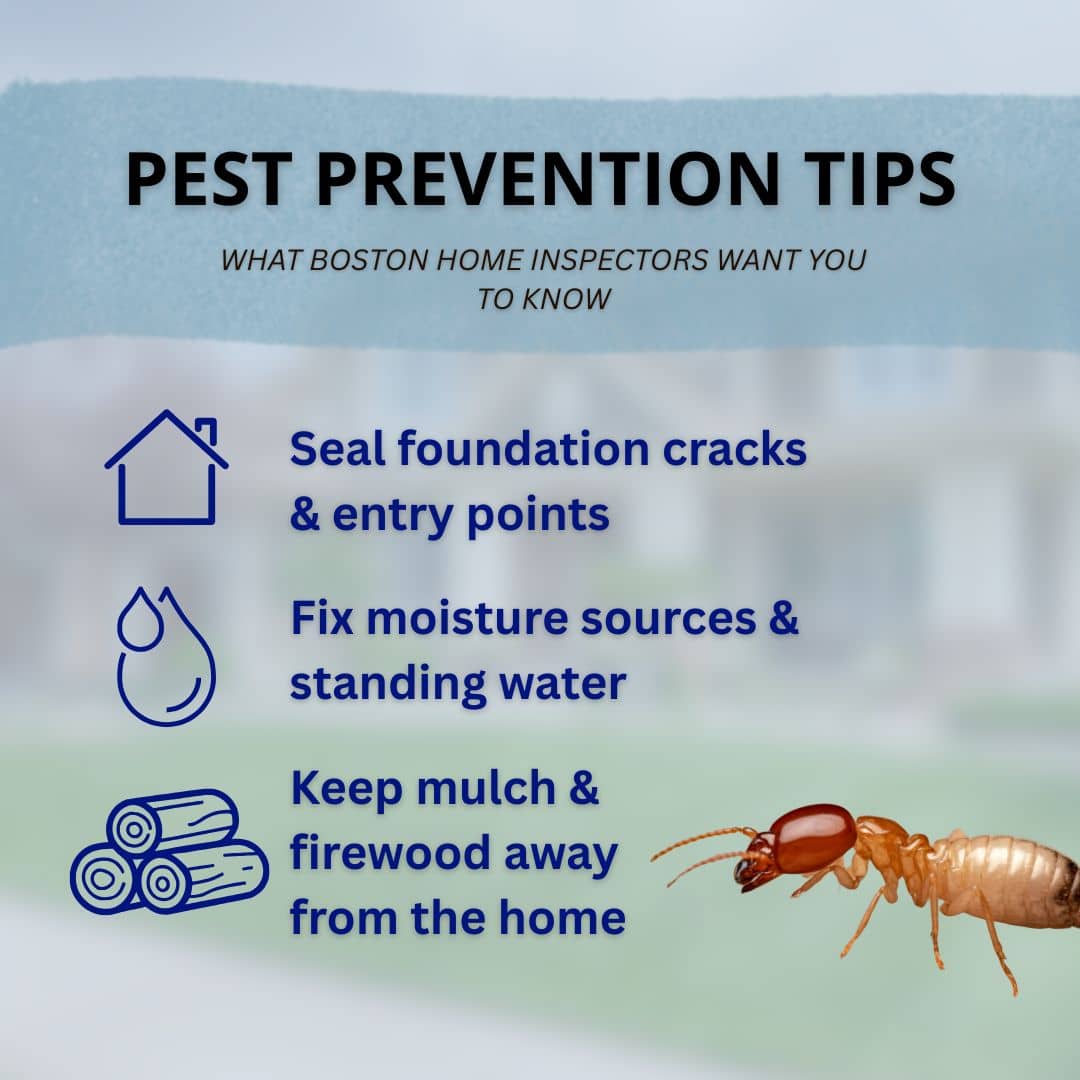
Sealing gaps and cracks in your home’s exterior is the single most effective pest prevention step you can take. Mice can squeeze through an opening the size of a dime. Ants and insects require even less space.
Do a perimeter walk at least twice a year, once in late spring and once in early fall.
Check these areas during every exterior inspection:
Per guidelines from the U.S. Environmental Protection Agency on safe pest control, closing off pest entry points is the first line of defense before any treatment is considered.
A professional pest inspection uses thermal imaging and moisture meters to find gaps and moisture intrusion points that a visual walkthrough misses. Learn more about what a pest inspection covers to see how that process works.
Every pest needs three things to stay in your home: food, water, and a place to hide. Removing any one of those significantly reduces activity. Removing all three makes your home unattractive to most common pests.
Moisture is one of the top drivers of pest activity in Greater Boston homes. Carpenter ants seek damp wood. Termites are drawn to soil with elevated moisture. Mosquitoes breed in any standing water that sits for more than four days.
Fix these moisture sources first:
The National Pest Management Association recommends that homeowners address moisture problems before any other pest prevention step because moisture issues drive infestations that treatment alone cannot resolve.
What happens outside your home directly affects what ends up inside it. Pests move from the yard to the foundation to the interior. Keeping the perimeter inhospitable slows that progression.
If you had a home inspection done before purchasing, review the inspection report for notes on wood rot, drainage issues, and foundation cracks. Many of the conditions that show up in pest inspections are first flagged in general home inspections. Our pest inspection service covers both structural vulnerabilities and active pest evidence in a single visit.
Use this checklist to stay ahead of pest pressure at each season transition.
Spring (March–April)
Summer (May–August)
Fall (September–October)
Winter (November–February)

The most reliable way to pest-proof a home you are considering buying is to schedule a professional pest inspection before closing. A certified inspector examines the structure for active infestations, entry points, moisture conditions, and wood damage. This is different from a general home inspection, though the two are often combined. Learn about what to expect during a pest inspection before you schedule one.
Boston homeowners most commonly deal with carpenter ants, house mice, Norway rats, termites, cockroaches, bed bugs, wasps, and cluster flies. The mix shifts by season: rodents are most active in fall and winter, ants and termites in spring, and mosquitoes in summer. Older building stock in Boston neighborhoods creates more entry points than newer construction.
Common signs include droppings near food sources or along baseboards, gnaw marks on wood or food packaging, hollow-sounding wood (a sign of termite damage), shed insect skins, unexplained odors, and sounds of movement inside walls or ceilings at night. Seeing a pest during the day, especially cockroaches or mice, often indicates a larger population.
Yes. Clutter provides shelter, nesting material, and cover for pests to move around undetected. Stacks of cardboard boxes, paper bags, and rarely moved storage give rodents and cockroaches an ideal habitat. Keeping basements, attics, and garages organized and free of cardboard is a practical pest prevention step most homeowners overlook.
For most homeowners, once a year is a practical baseline. If you live near wooded areas, bodies of water, or in an older home with known moisture or wood issues, twice a year is more appropriate. Massachusetts mortgage lenders sometimes require a pest inspection as part of the closing process. Contact R&C Inspectors to schedule an inspection in any season.
The most common signs are scratching or rustling sounds at night, which typically indicate rodents. Soft or hollow-sounding drywall can suggest termite damage. You may also notice small grease marks along baseboards where rodents travel the same route repeatedly, unexplained gaps or cracks appearing in wood trim, or musty odors in areas with no obvious moisture source. A pest inspection with thermal imaging can detect heat signatures from animals inside walls that a visual inspection would miss. Our thermal imaging inspection service is particularly useful for identifying hidden pest activity.
DIY prevention goes a long way, but there are situations where a professional inspection is the right call.
Schedule a pest inspection when:
R&C Inspectors serves Greater Boston, including Newton, Waltham, Quincy, Medford, and Somerville. Our InterNACHI-certified inspectors combine visual assessment with thermal imaging and moisture metering to find evidence of pest activity that standard walkthroughs miss.
To schedule a pest inspection, visit our pest inspection page or call 617-615-9559.
Keeping pests out of a Greater Boston home comes down to three things: seal entry points, remove food and moisture sources, and stay ahead of seasonal pest activity with regular exterior maintenance.
Key takeaways:
Ready to know exactly what is in your home? Schedule a pest inspection with R&C Inspectors and get a detailed report with no surprises.