
- Book your home inspection online today and save $25 on your next inspection! BOOK NOW!
-
 617-615-9559
 617-615-9559
Fill up the form and we will reach out to help you set up a suitable time slot for your property inspection.

Imagine tapping on a wooden beam in your basement and hearing a hollow thud instead of a solid knock. Or noticing a thin brown tube snaking up your foundation wall that wasn’t there last spring. These are two of the most common early signs of subterranean termite damage, and for many homeowners in Greater Boston, they come as a complete surprise.
Subterranean termite damage is one of the most common and costly problems a homeowner can face. What makes it especially difficult is that the damage often builds up long before anyone notices. By the time visible signs appear, termites may have already compromised structural wood throughout your home.
If you own a home in Newton, Somerville, Quincy, Medford, Waltham, or anywhere in the Greater Boston area, understanding what to look for and what to do when you find it can save you from a very expensive surprise.
Not all termites behave the same way. In Massachusetts, the only termite species homeowners need to worry about is the Eastern subterranean termite. Drywood termites and Formosan termites cannot survive New England winters and are not established in the region.
Subterranean termites live underground. They build their colonies in the soil beneath or near your home and travel up through the earth to reach the wood in your foundation, basement, and structural framing. Because they need moisture to survive, they build mud tubes to travel between the soil and the wood they are eating.
What makes them so difficult to detect is that they eat wood from the inside out. The surface of a piece of damaged wood can look completely normal while the interior has been hollowed out. A colony can be active in your home for three to eight years before producing any signs visible to the naked eye.
Knowing what to look for is your first line of defense. These are the signs homeowners in Greater Boston should actively watch for.
Mud tubes are the most recognizable sign of subterranean termite activity. They are roughly the width of a pencil, brown in color, and made from soil, wood particles, and termite saliva. Think of them as highways that allow termites to travel from the ground to your home’s wood without being exposed to the open air.
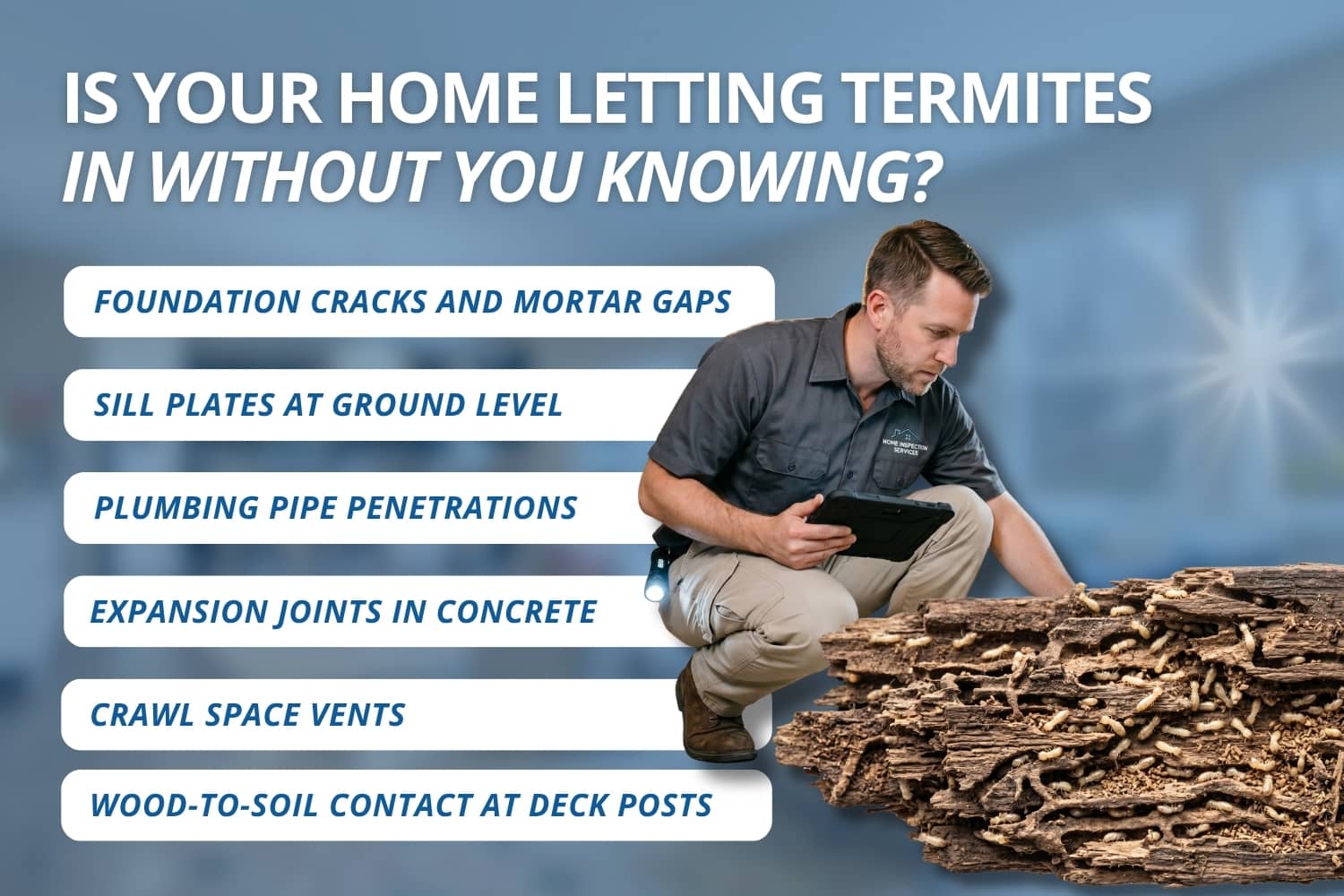
Look for mud tubes along exterior and interior foundation walls, on basement walls and crawl space piers, climbing up support posts or running across floor joists, near plumbing pipes that penetrate the foundation, and through cracks or gaps between concrete blocks or stones.
To check if a tube is active, carefully break a small section in the middle. If termites are present and the damage is current, you may see live termites inside or notice the tube has been repaired within a few days. An empty tube does not necessarily mean the infestation is gone, as termites regularly abandon and rebuild their tunnels.
Subterranean termites eat along the grain of wood, consuming the softer interior fibers while leaving a thin outer shell. The result is wood that looks intact but is structurally compromised underneath.
You can check for this yourself by gently tapping exposed wood with the handle of a screwdriver. Healthy wood will produce a solid sound, while termite-damaged wood produces a dull, hollow thud, sometimes described as a papery sound. Pressing a screwdriver tip into the surface of badly damaged wood may cause it to sink in or crumble.
Unlike drywood termites, subterranean termites leave soil and mud packed into the galleries they create. If you see wood with a honeycomb pattern and a gritty gray-brown material inside the tunnels, subterranean termites are a likely cause.
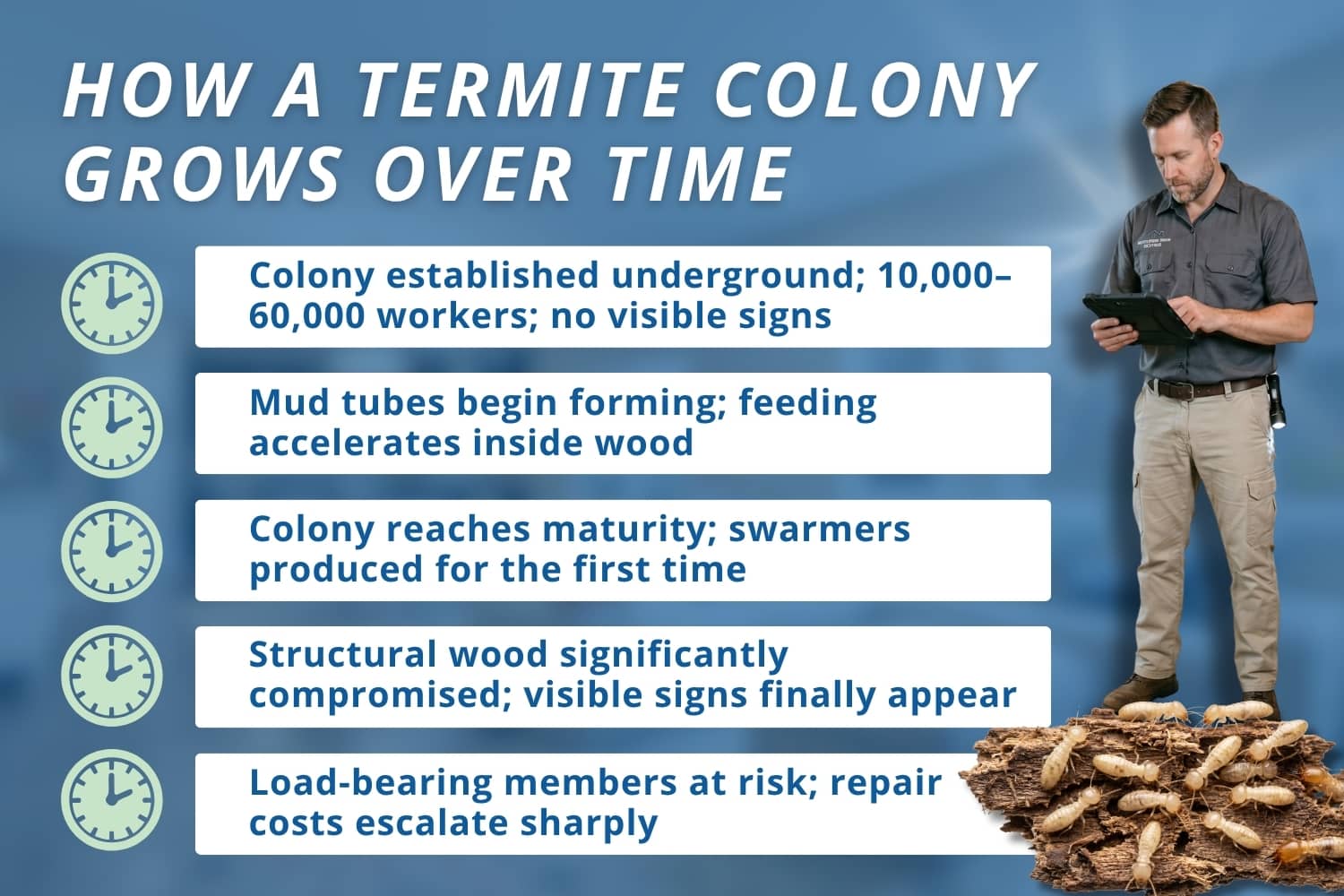
Once a termite colony matures, typically after three to five years, it produces winged reproductive termites called swarmers. In Massachusetts, swarms typically occur on warm days following rain between March and May. Spotting swarmers indoors is a serious warning sign that an established colony is active somewhere in or near your home.
Swarmers are often confused with flying ants. Termites have straight antennae, a thick, uniform waist, and two pairs of wings that are equal in length. Flying ants have elbowed antennae, a pinched waist, and a front pair of wings that is noticeably longer than the back pair.
Even if you miss the swarmers themselves, you may find their discarded wings on windowsills, near exterior doors, or around light fixtures. Swarmers shed their wings shortly after landing. A cluster of small, equal-length wings is a clear indicator of termite activity.
Subterranean termites bring moisture with them as they feed, which can affect the wood and materials around them. This sometimes causes paint to bubble, blister, or peel in areas that have no obvious plumbing source nearby. It can also cause wood to swell, warp, or darken.
Doors and windows that suddenly start sticking, floors that feel slightly springy or uneven, or ceilings that appear to be sagging are all worth investigating. These symptoms are easy to mistake for a plumbing leak or general settling of an older home. If no water source explains the problem, a termite inspection is a smart next step.
Subterranean termite galleries often leave a thin, gritty, gray-brown residue on damaged wood surfaces. If you notice wood in your basement or crawl space that has a slightly textured or dirty appearance and feels unusually soft, it is worth getting a closer look.
A homeowner in Somerville once noticed a discolored patch on the back of a basement wall panel she was removing during a renovation. What looked like general grime turned out to be termite damage that had been active for several years. The framing behind the panel had lost most of its structural strength.
Now that you know the signs, the next step is understanding exactly where in your home these warning signs are most likely to appear.
Subterranean termites tend to concentrate in areas where wood is close to the ground and moisture is present. Here is a quick reference for the most vulnerable spots in a typical Greater Boston home:
| Location | What to Look For | Risk Level |
|---|---|---|
| Basement sill plates | Mud tubes, hollow wood, soil in galleries | Very High |
| Floor joists | Soft or sagging wood, tubes on surfaces | Very High |
| Crawl space piers and posts | Tubes, climbing supports, and damaged bases | High |
| Foundation wall cracks and gaps | Mud tubes entering through openings | High |
| Bathroom and kitchen subfloor | Moisture-softened wood near plumbing | Moderate to High |
| Exterior wood trim and siding | Tubes on exterior walls, bubbling paint | Moderate |
| Deck or porch framing | Wood-to-soil contact, damaged posts | Moderate |
The closer the wood is to the soil, and the more moisture is present, the more attractive it is to subterranean termites.
The Greater Boston housing market includes many homes built between the late 1800s and the 1940s. These properties are wonderful in many ways, but they also carry a higher risk for subterranean termite damage for several reasons.
Many pre-1940s homes in neighborhoods like Newton, Medford, and Waltham were built using balloon framing. This construction style features wall cavities that run continuously from the foundation to the attic, creating open channels that can serve as direct pathways for termites moving upward through the structure.
Older homes in the region also frequently have stone or brick foundations rather than poured concrete. The gaps between stones and deteriorating mortar create easy entry points for termites, even without visible cracks. Much of Greater Boston’s older housing stock also features unfinished basements with exposed sill plates, floor joists, and framing, which are among the first places termites target.
Boston’s glacial till and marine clay soils retain moisture well. This creates the consistently humid underground environment that subterranean termites need to survive and thrive. Termites do not die in winter either. When temperatures drop, they retreat below the frost line, but inside a heated basement or crawl space, a colony can remain fully active throughout the year.
Massachusetts is classified as USDA Termite Infestation Probability Zone 2, meaning the state carries a moderate to heavy risk of structural termite damage. Research from the USDA Forest Service also identifies New England as one of the regions most vulnerable to expanding termite populations as winters continue to warm.
Finding signs of termite activity can feel alarming, but the situation is manageable, especially when you respond quickly and carefully.
Step 1: Do not disturb the evidence. Avoid spraying insecticide, destroying mud tubes, or opening walls. Killing surface termites does nothing to eliminate a colony. Disturbing the site also makes it harder for an inspector to accurately assess the situation.
Step 2: Document what you found. Take clear photos of mud tubes, damaged wood, swarmers, or discarded wings. Note where you found them and the approximate date. This information helps an inspector understand the scope of the problem.
Step 3: Schedule a professional inspection. A licensed termite inspector will conduct a thorough evaluation of your home, including the basement, crawl space, foundation walls, and accessible framing. They use moisture meters, probing tools, and in some cases, thermal imaging to detect activity in areas that are not immediately visible. Get at least two to three estimates before committing to treatment.
Step 4: Understand your treatment options. There are two primary approaches for subterranean termites. Liquid barrier treatments involve applying termiticide in trenches around the foundation, a common and effective method lasting five to twelve years. Bait systems use stations placed around the perimeter of the home that attract termites and deliver a slow-acting poison back to the colony.
Step 5: Do not begin repairs until the infestation is confirmed eliminated. Repairing damaged wood while termites are still active is a wasted investment. Once treatment is complete, a structural engineer may be needed if load-bearing members are involved.
Step 6: Know the insurance reality. Homeowners’ insurance almost universally excludes termite damage. Insurers classify infestations as a preventable maintenance issue rather than sudden or accidental damage. Some pest control companies offer termite bonds or warranties that cover future treatment and limited repair costs, which can be worth exploring.
Taking these steps gives you a clear path forward and puts you back in control of the situation.
When termite inspectors go on the search, they look for several key bits of evidence. These are indicators that you may not be able to detect on your own. Sadly, you may not even notice termites in your household until they have caused significant damage to your wooden structures, which is why termite inspections remain so important.
Make sure the specialist has access to any critical areas, particularly your attic, garage, and basement. Remove anything obstructing your attic, anything blocking expansion joints in your garage, and anything that restricts access to the opening of your basement and the space below your sink. Giving your inspector full access ensures a more thorough and accurate evaluation.
They will look everywhere for signs of underground termites. The time required depends on the size of your property and how accessible your paneling is, but in general, it requires about an hour. After the inspection, the technician will explain what they discovered, how they can address any termite activity found, and provide you with a treatment quote if necessary.
If you are ready to get a clear picture of your home’s condition, you can learn more and schedule a visit through R&C Inspectors’ Termite Inspection service.
How fast does subterranean termite damage get serious?
Serious structural damage typically takes three to eight years of active infestation to develop. However, a large, well-established colony can consume roughly twenty-two linear feet of a standard 2×4 board in a single year. The damage compounds over time, which is why early detection matters so much.
Can subterranean termites damage a concrete foundation?
Termites cannot eat concrete, but they do not need to. They exploit existing cracks, expansion joints, gaps around utility pipes, and deteriorating mortar to find a path through the foundation to the wood above it. Older stone and rubble foundations, which are common in Greater Boston, provide numerous entry points even without visible damage.
How is a termite inspection different from a regular home inspection?
A regular home inspection covers the full condition of a property, including the roof, structure, plumbing, electrical, and more. A termite inspection focuses specifically on wood-destroying insects and is conducted by a licensed pest control professional. If you are concerned about termite activity specifically, a dedicated termite inspection is the right service to request.
How often should I have my home inspected for termites?
Most pest control professionals recommend having your home inspected for termites once every one to two years. Older homes in Greater Boston, especially those with stone foundations, unfinished basements, or crawl spaces, benefit from annual inspections. If you have had prior termite activity or treatment, annual inspections are strongly advised.
Subterranean termites are patient. They work slowly, quietly, and almost entirely out of sight. But the damage they leave behind is real, and in Greater Boston’s older homes, the conditions that attract them are common.
The good news is that the signs are recognizable once you know what to look for. Mud tubes along your foundation, hollow-sounding wood, discarded wings near windows, and bubbling paint with no plumbing source nearby are all signals worth taking seriously.
If you have noticed any of these warning signs, or if it has been more than a year since your last inspection, now is a good time to get clarity on your home’s condition. R&C Inspectors provides professional termite inspections for homeowners throughout Greater Boston, including Newton, Quincy, Waltham, Medford, and Somerville. Schedule your termite inspection today and find out exactly what is happening in your home before small signs become a big problem.