
- Book your home inspection online today and save $25 on your next inspection! BOOK NOW!
-
 617-615-9559
 617-615-9559
Fill up the form and we will reach out to help you set up a suitable time slot for your property inspection.
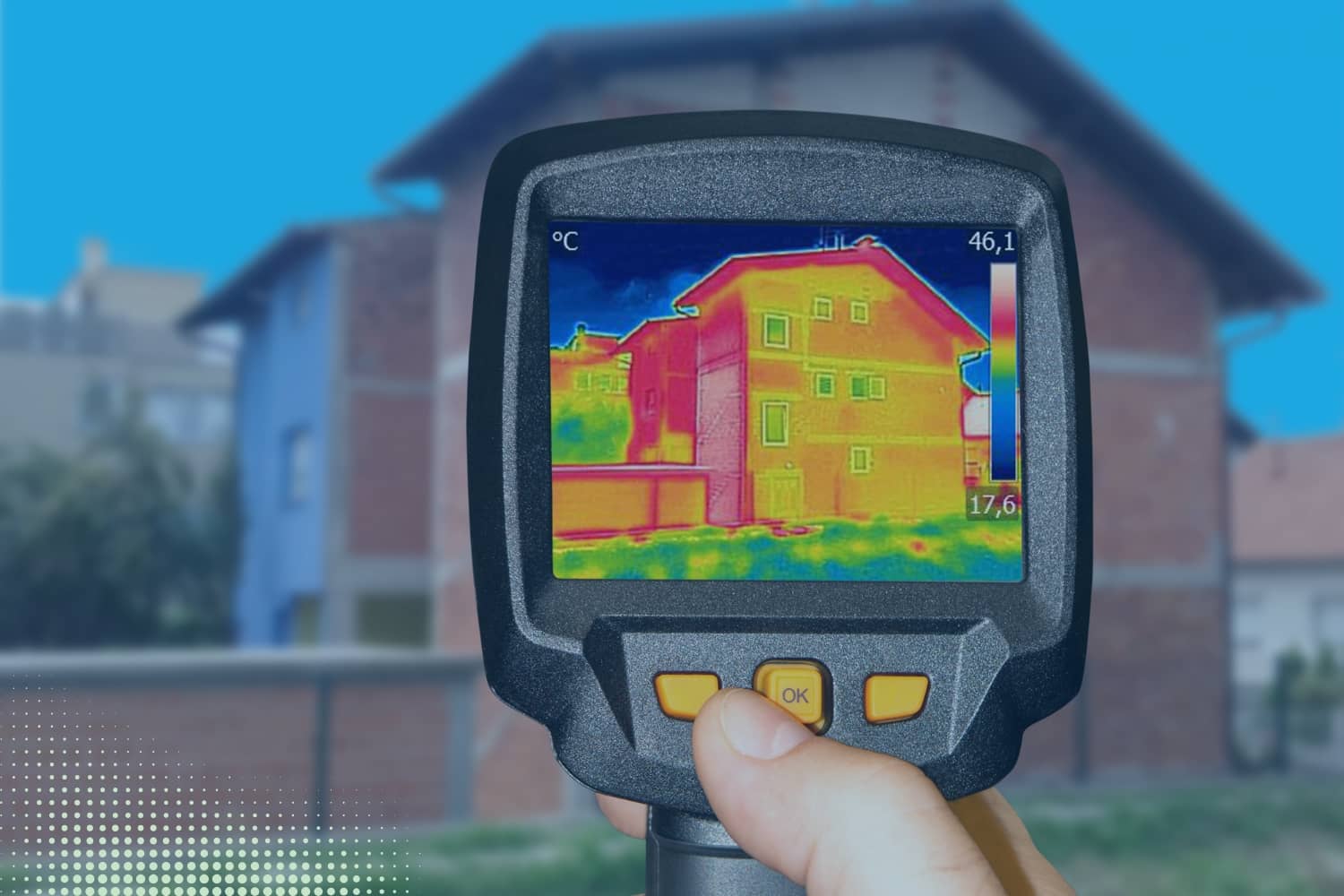
Infrared imaging is a valuable inspection tool that helps uncover hidden issues in a home by detecting surface temperature differences that are not visible to the naked eye. These temperature variations can point to underlying concerns such as moisture intrusion, missing or uneven insulation, air leakage, or electrical irregularities. In New England homes, where cold winters, snow, and frequent freeze-thaw cycles place added stress on building materials, these issues often develop quietly behind walls, ceilings, and floors.
When infrared imaging is used as part of a professional home inspection, it provides a deeper look at a property’s overall condition without damaging finishes or disrupting the home. This added layer of insight helps homeowners and buyers identify potential concerns earlier, understand where further evaluation may be needed, and make more informed decisions before small issues turn into larger, more expensive problems.
Many New England homes are older and were built before modern energy and moisture control standards. Over time, insulation can settle, building materials age, and small leaks or gaps may develop. Cold winters, snow accumulation, and repeated freeze-thaw cycles place added stress on roofs, walls, and foundations, increasing the likelihood of hidden moisture, drafts, and uneven indoor temperatures.
Infrared imaging works well in these conditions because it detects heat loss and temperature differences between indoor and outdoor environments.
By highlighting unusual temperature patterns on walls, ceilings, and other surfaces, infrared imaging allows inspectors to identify potential concerns such as hidden moisture, insulation gaps, or air leakage without opening walls or damaging finishes. This makes it a practical and non-invasive tool for evaluating New England homes.
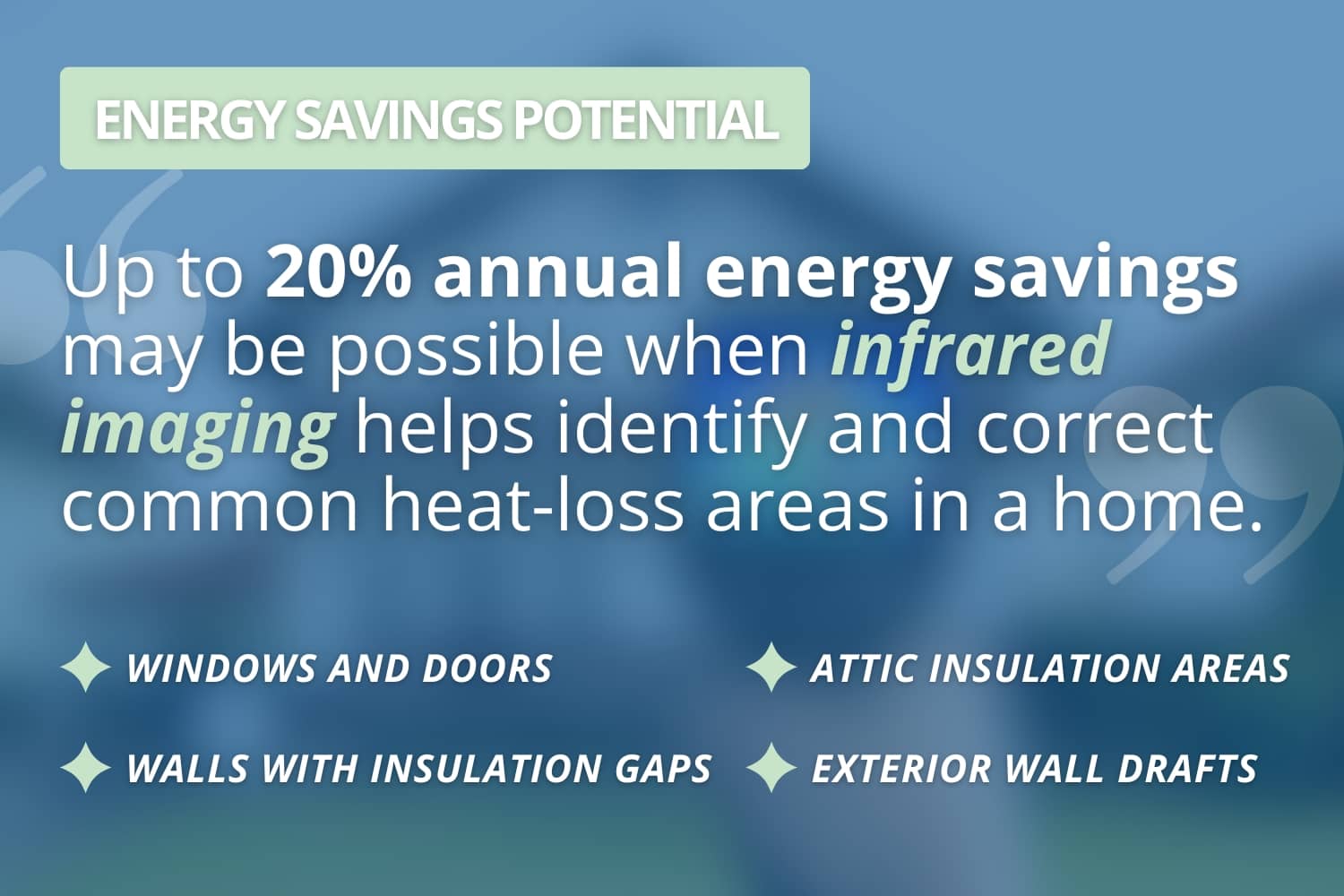
Infrared imaging, also known as thermography, uses specialized equipment to measure surface temperatures and display them as visual heat patterns. During a home inspection, this technology helps identify areas that may need closer attention without damaging the home.
Infrared imaging works by:
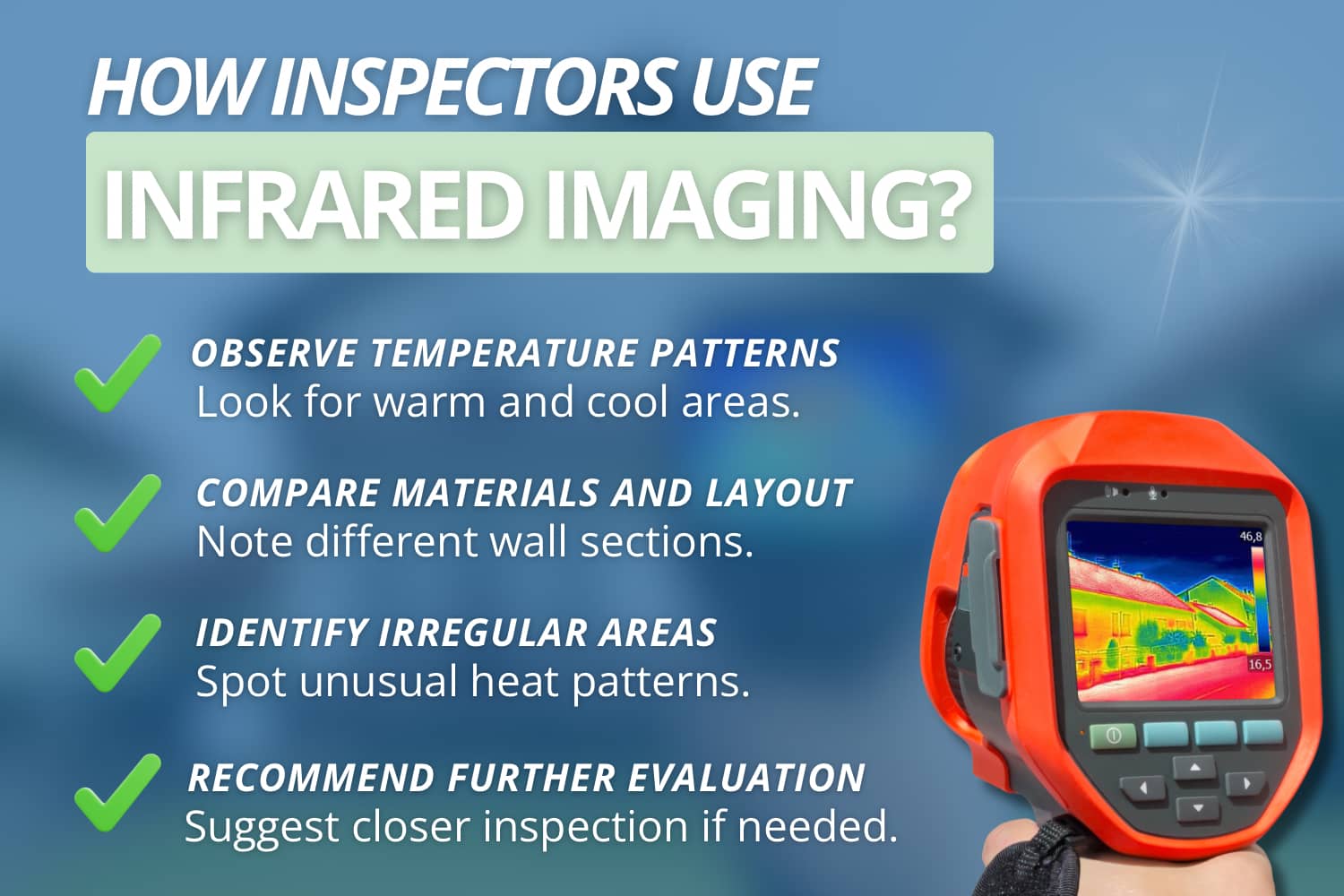
Measuring surface temperature differences across walls, ceilings, floors, and other visible building components
Creating thermal images that show warm and cool areas, making temperature irregularities easy to identify
Highlighting patterns that differ from surrounding surfaces, which may indicate hidden conditions rather than visible damage
Helping identify possible concerns, such as moisture intrusion, missing or uneven insulation, air leakage, or overheating electrical components
Supporting further evaluation, allowing inspectors to focus on specific areas using additional tools or professional judgment
Infrared imaging does not see through walls and does not confirm defects on its own. Instead, it serves as a non-invasive screening tool that enhances a visual inspection by guiding where closer inspection or follow-up may be appropriate.
Hidden moisture is one of the most common issues identified during a thermal inspection. Water changes how building materials hold and release heat, often showing up as cooler areas on a thermal image.
In New England homes, moisture problems commonly stem from:
Roof leaks caused by aging materials or weather exposure
Ice dams that force melting snow beneath roofing surfaces
Plumbing leaks hidden inside walls or ceilings
Basement seepage from groundwater or poor drainage
Poor ventilation that leads to condensation buildup
These issues can exist long before visible stains or damage appear. Identifying moisture concerns early helps reduce the risk of mold growth, wood decay, and long-term structural deterioration.
Insulation issues are common in homes of all ages, whether they are original structures or recently renovated. Over time, insulation can settle, shift, or become damaged, leaving gaps that reduce its effectiveness. In some cases, renovations or additions may also create uneven coverage when insulation is not installed consistently across all areas.
These conditions allow heat to escape during colder months and enter the home during warmer periods, leading to uneven indoor temperatures and higher energy use.
Thermal imaging helps make these problems easier to identify by revealing temperature differences along walls, ceilings, attic floors, and other insulated surfaces. Cold spots or irregular patterns often point to missing, compressed, or poorly installed insulation.
By identifying these areas during an inspection, homeowners can better prioritize upgrades that improve comfort, support energy efficiency, and reduce unnecessary heat loss without relying on guesswork.
Abnormal heat patterns in electrical systems are another issue that can be identified during a thermal inspection. Electrical components are designed to operate within a normal temperature range. When parts of the system overheat, it can indicate a problem that may not be visible during a standard visual inspection.
Infrared imaging can help highlight concerns such as:
Loose or deteriorated electrical connections that create resistance and excess heat
Overloaded circuits carrying more current than they were designed to handle
Aging or failing components that no longer function efficiently
Imbalanced loads within electrical panels that cause uneven heat distribution
Improper or outdated wiring practices that increase stress on the system
When these hot spots are identified, inspectors may recommend further evaluation by a licensed electrician. Addressing electrical concerns early helps reduce safety risks, supports reliable system performance, and can prevent minor issues from developing into more serious electrical failures.
Air leaks are a common source of discomfort and energy loss in many homes, particularly around openings and transition points where materials meet. Gaps can form over time as building materials expand, contract, or settle, allowing outside air to move freely in and out of the home. These leaks are often difficult to locate with a visual inspection alone.
Infrared imaging helps identify air leakage by revealing temperature differences along windows, doors, attic access points, wall penetrations, and other vulnerable areas. During colder months, these leaks often appear as cold streaks or uneven temperature patterns on interior surfaces. Identifying air leakage locations allows homeowners to take targeted steps such as sealing gaps, improving weather stripping, or upgrading insulation.
Addressing these areas can improve indoor comfort, reduce drafts, and support more consistent temperature control throughout the home
Roof and attic areas are especially vulnerable to moisture and heat-related issues, many of which are difficult to detect during a visual inspection alone. Infrared imaging helps identify temperature patterns that may indicate hidden concerns within these spaces.
Thermal imaging can help highlight issues such as:
Moisture trapped in attic insulation, often caused by roof leaks or condensation
Roof leaks around flashing, vents, or penetrations that may not yet show visible staining
Poor attic ventilation can lead to heat buildup and moisture accumulation
Uneven insulation coverage across attic floors or sloped ceilings
Heat loss through the roof, which can contribute to ice dam formation
While infrared imaging does not replace a full roofing evaluation, it provides valuable insight that helps inspectors identify areas that may require further assessment. This allows homeowners to address roof and attic concerns early and reduce the risk of long-term damage.
Infrared imaging can sometimes reveal unusual temperature patterns that relate to how a home was built or how materials have changed over time. Differences in material type, thickness, or density can affect how heat moves through a structure, creating thermal patterns that stand out during an inspection.
These irregular patterns may be associated with conditions such as:
Variations in framing layout behind walls or ceilings
Changes in building materials from past repairs or renovations
Areas of moisture accumulation affecting structural components
Sections where materials have settled, shifted, or aged differently
While these findings do not confirm structural defects, they can point to areas that may benefit from closer evaluation or monitoring. When used responsibly, infrared imaging enhances the inspection process by identifying irregular conditions while avoiding assumptions or overstated conclusions.
Infrared imaging highlights temperature differences, but those patterns still require professional interpretation. The table below outlines common findings inspectors may see in New England homes and why they matter.
|
Infrared Imaging Finding |
What It May Indicate |
Why It Matters for Homeowners |
|---|---|---|
|
Cool areas on walls or ceilings |
Hidden moisture from leaks or condensation |
Helps reduce the risk of mold, rot, and ongoing moisture damage |
|
Cold streaks in exterior walls |
Missing or poorly installed insulation |
Can lead to heat loss and uneven indoor comfort |
|
Hot spots in electrical panels |
Overloaded circuits or loose connections |
May indicate potential electrical safety concerns |
|
Uneven temperatures around windows or doors |
Air leaks or failed weather sealing |
Causes drafts and reduced energy efficiency |
|
Warm areas in attic insulation |
Moisture trapped in insulation |
Wet insulation loses effectiveness and may hide roof issues |
|
Irregular thermal patterns in floors or walls |
Material differences or moisture accumulation |
May point to areas needing closer evaluation |
Infrared imaging does not diagnose problems on its own. It helps inspectors focus on areas where additional evaluation, monitoring, or maintenance may be appropriate.
Infrared imaging adds an extra level of insight to a home inspection by helping reveal conditions that may not be visible during a standard visual review. For buyers, this additional information can clarify the true condition of a property before purchase and highlight areas that may need attention or further evaluation. Understanding these issues early helps buyers make more confident decisions and plan for future maintenance.
For homeowners, infrared imaging supports proactive care and long-term planning. Identifying concerns such as moisture, insulation gaps, or heat loss early allows repairs to be addressed before they become more disruptive or expensive. By providing a clearer picture of how a home is performing, infrared imaging helps reduce unexpected issues and supports more informed decisions over time.
Is infrared imaging included in every home inspection?
Not all inspections automatically include infrared imaging. Some inspectors offer it as an advanced service or use it when conditions allow. It is best to ask what inspection tools are included before scheduling.
Does infrared imaging work year-round in New England?
Infrared imaging works best when there is a clear temperature difference between indoor and outdoor air. This often makes cooler months ideal, but it can still be useful in other conditions.
Is infrared imaging especially helpful for older homes?
Yes. Older homes often benefit the most due to aging insulation, moisture risks, and older electrical systems that may show thermal irregularities.
Infrared imaging is most effective when it is used as part of a professional home inspection rather than as a standalone service. It provides added insight into how a home is performing by highlighting areas that may need closer attention, all without opening walls or disturbing finished surfaces.
For New England homes, seasonal temperature swings, snow accumulation, and moisture exposure can quietly affect roofs, insulation, and building materials over time. Including infrared imaging in a home inspection can help identify developing concerns earlier and reduce unexpected issues later.
R & C Inspectors offers comprehensive home inspection services tailored to the needs of New England homeowners, providing clear and practical insights that help clients move forward with confidence when buying, maintaining, or improving their homes.