
- Book your home inspection online today and save $25 on your next inspection! BOOK NOW!
-
 617-615-9559
 617-615-9559
Fill up the form and we will reach out to help you set up a suitable time slot for your property inspection.
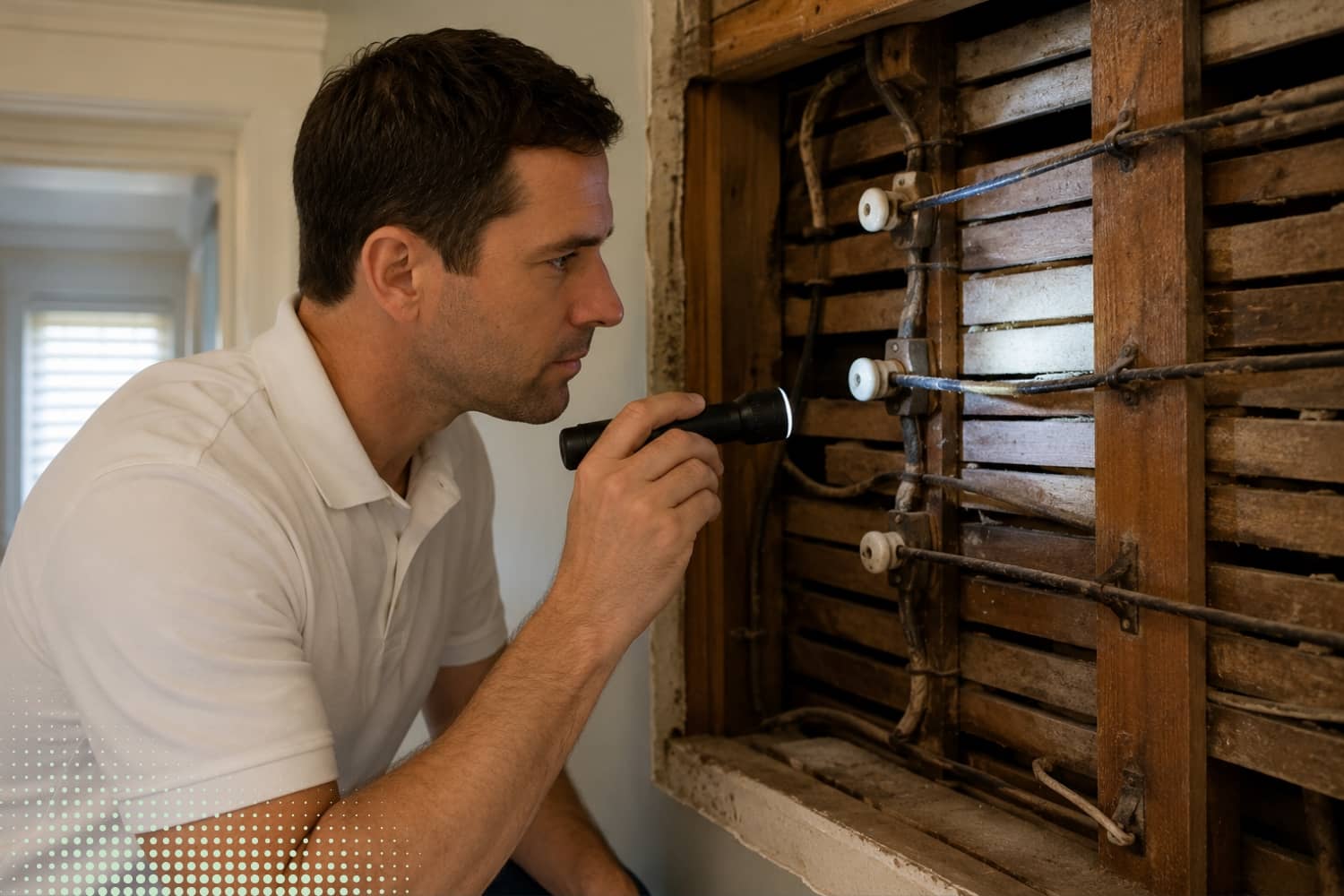
Buying a home in the Greater Boston area is an exciting step. Local neighborhoods feature beautiful historic properties, from traditional triple-deckers in Somerville and Medford to classic Victorian homes in Newton and Waltham. However, vintage homes come with unique maintenance needs that every buyer should understand. One critical feature you may encounter during your home search is knob and tube wiring.
If you are looking at properties built before 1950, there is a strong chance this old electrical system is present. Knob and tube wiring can affect home safety, property insurance, and your overall purchase budget. Knowing how this electrical setup works helps you make smart decisions before signing a final contract. This guide covers everything Boston home buyers need to know about knob and tube wiring.
Knob and tube wiring was the standard electrical installation method in American homes from the late 1800s through the late 1940s. It uses single copper conductors that run through wall cavities, attic spaces, and floor joists. Unlike modern electrical cables that wrap all wires inside a single plastic casing, knob and tube systems keep wires separated.
Visual Idea: A simple diagram showing a side-by-side comparison of a vintage knob and tube setup next to a modern Romex cable, labeling the knobs, tubes, and individual wires clearly.
The system relies on two basic ceramic parts to keep electricity flowing safely through wooden frames:
Learning to recognize these basic components helps you identify legacy wiring during your initial property walkthrough.
Knob and tube wiring remains common across Greater Boston because our local housing market is one of the oldest in the country. Cities like Boston, Newton, Waltham, Quincy, Medford, and Somerville experienced massive building booms between 1890 and 1940. During those decades, builders installed knob and tube wiring as state-of-the-art technology.
Over the years, many homeowners updated their main electrical service panels without replacing the original wires hidden inside plaster walls. As a result, many historic homes still have active sections of knob and tube wiring connected deep within their electrical systems.
Recognizing this local construction history makes thorough pre-purchase evaluations even more important for area buyers.
Knob-and-tube wiring isn’t inherently dangerous because it’s old, but it wasn’t built for today’s electrical demands. Modern appliances and electronics place much greater loads on these aging systems than they were designed to handle.
Home buyers should be aware of five major safety risks associated with aging knob and tube systems:
Understanding these five core safety risks empowers you to make informed decisions about your future home.
|
Feature |
Knob and Tube Wiring |
Modern Plastic Cable (Romex) |
|
Typical Era Installed |
1880s to 1940s |
1960s to Present |
|
Ground Wire Included |
No (2-prong system) |
Yes (3-prong system) |
|
Insulation Material |
Rubber and cloth fabric |
Tough PVC plastic |
|
Heat Dissipation Need |
Requires open air space |
Rated for direct insulation contact |
|
Electrical Capacity |
Low (15-amp maximum) |
High (15, 20, 50+ amp circuits) |
|
Home Insurance Status |
High risk (often rejected) |
Standard (accepted by all carriers) |
Comparing these key differences highlights why updating legacy electrical systems is often a top priority for historic home buyers.
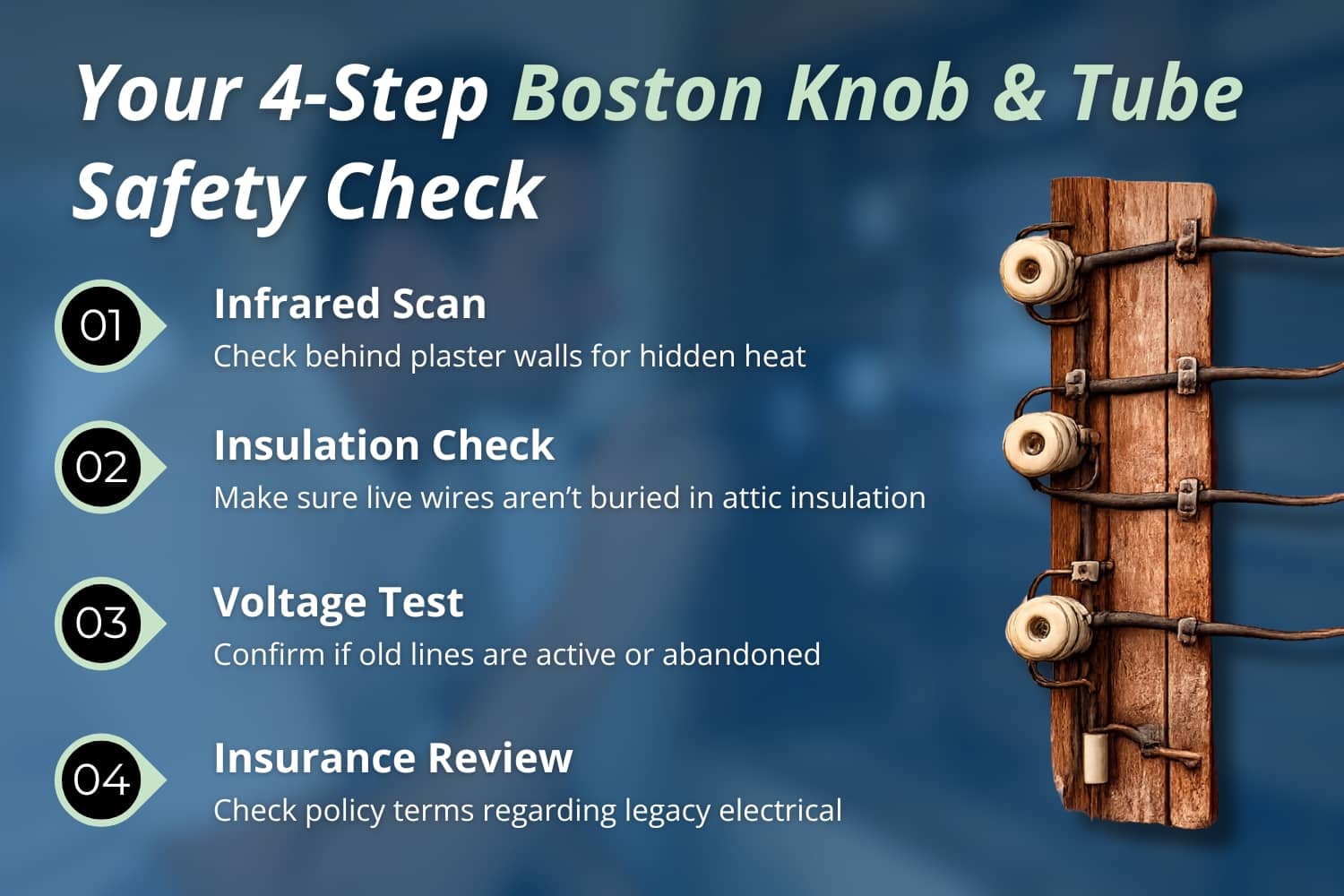
Active knob-and-tube wiring creates an immediate challenge during the home buying process because most home insurance companies in Massachusetts view it as an unsafe fire hazard. Insurance companies require detailed underwriting information before writing a policy for older homes.
When an inspector discovers active knob-and-tube wiring, insurance carriers generally take one of three paths:
Addressing these insurance requirements early in the buying process prevents unnecessary closing delays.
Spotting hidden knob and tube wiring requires systematic evaluation and specialized tools. During a comprehensive property inspection in Quincy, Medford, or Somerville, experienced home inspectors review visible areas and use advanced technology to locate hidden hazards.

Inspectors use several proven steps to evaluate electrical systems:
Basements, attics, and crawl spaces offer the clearest view of structural wiring runs. Inspectors examine open joists and wall studs to locate porcelain knobs, ceramic tubes, and vintage cloth insulation.
Standard two-prong outlets signal an ungrounded electrical system. However, three-prong outlets are sometimes installed on old knob-and-tube lines without proper grounding. Inspectors test outlets in every room to verify correct wiring, polarity, and grounding.
Visual checks cannot reveal what sits behind solid plaster walls. Thermal imaging cameras detect abnormal heat patterns caused by overloaded or covered knob and tube wires running inside wall cavities.
In historic homes, old knob and tube wires are sometimes disconnected during past remodeling projects. Inspectors use non-contact voltage detectors to confirm whether visible lines are completely dead or still carrying live current.
Having an experienced inspector run these tests gives you a complete picture of your electrical system.
When inspecting a historic home, electrical wiring is rarely the only system that needs careful attention. Older New England properties require a thorough inspection approach to protect your family and your real estate investment.
During your inspection window, consider these essential property checks:
Scheduling these additional evaluations gives you total confidence in the overall health of your property.
Finding knob and tube wiring during your home inspection does not mean you must walk away from the property. Instead, it provides clear facts that help you negotiate fair terms and plan your budget.
Here are three practical steps to take if your target home has knob and tube wiring:
Taking these proactive steps keeps your home purchase moving forward while protecting your financial budget.
How can inspectors spot hidden structural or electrical issues behind plaster walls?
Infrared scanning and thermal imaging allow inspectors to detect subtle surface temperature changes. This non-invasive technology helps locate hidden electrical hot spots, missing insulation, and active moisture leaks concealed inside finished plaster or drywall.
Should buyers test for radon gas in older Boston homes?
Professional radon gas testing is strongly recommended for all historic properties in the area. Local New England granite bedrock and aging concrete basements create ideal conditions for invisible, odorless radon gas to collect in lower living spaces.
Can damp basements in historic homes impact indoor air quality?
Older stone foundations and plaster walls can trap excess humidity over time, creating an ideal environment for hidden mold growth. Comprehensive indoor air quality testing helps buyers identify airborne spores and hidden moisture problems before finalizing a purchase.
Why are pest inspections essential for vintage New England properties?
Older timber-framed structures often have decades of exposure to soil moisture and wood-decaying insects. A dedicated termite inspection ensures structural beams and sills are free from hidden damage caused by termites or carpenter ants.
Do older municipal pipe connections affect drinking water safety?
Historic neighborhoods often rely on legacy municipal lines or original interior plumbing. Ordering complete water quality testing checks your drinking supply for elevated lead levels, heavy metals, and bacteria before you move in.
Evaluating vintage electrical systems, working with home insurance rules, and managing purchase negotiations requires clear facts. If you are preparing to buy a home in Newton, Waltham, Quincy, Medford, Somerville, or Greater Boston, scheduling a professional inspection is your best first step.
Never rely on quick visual glances or seller guesses when assessing electrical safety or structural health. Partnering with a skilled local inspector gives you an honest, detailed review of the entire property from top to bottom.
Knob and tube wiring is a common part of Boston real estate history, but it does not have to stop you from buying a great home. By understanding safety risks, knowing insurance rules, and relying on professional testing, you can navigate your purchase with full confidence.
Are you buying a home in Greater Boston? Contact R & C Inspectors today to schedule your complete home inspection, infrared thermal scanning, radon gas testing, and environmental checks. Our expert team is ready to help protect your investment and give you total peace of mind.