
- Book your home inspection online today and save $25 on your next inspection! BOOK NOW!
-
 617-615-9559
 617-615-9559
Fill up the form and we will reach out to help you set up a suitable time slot for your property inspection.

Buying a condo in Greater Boston is an exciting step, but it comes with unique responsibilities. While your condo association handles shared spaces, you are fully responsible for everything inside your unit walls. A professional condo inspection reveals hidden repairs, protects your budget, and ensures you know exactly what you are buying before closing. Here is what to expect during your inspection walk-through.
A Boston condo inspection focuses on the specific boundary between your private living space and the building’s shared infrastructure.
New England has some of the oldest housing stock in the country. In communities like Newton, Medford, and Somerville, many condos are housed inside historic structures or multi-unit triple-deckers built over a century ago. These properties often feature legacy heating systems, vintage plumbing connections, and unique structural layouts that require careful evaluation.
Modern units built in nearby areas like Quincy or Waltham also carry their own risks. Quick construction turnarounds, poor building envelope sealing, or improper ventilation installations can cause unexpected problems for new owners. A localized inspection accounts for these regional building quirks, helping you understand both old-world craftsmanship and modern building standards.
A standard condo inspection evaluates the safety, operation, and condition of all components within your specific unit boundaries. Your inspector works systematically from room to room to evaluate every accessible component.
During the walk-through, your inspector will test electrical outlets, run plumbing fixtures, check heating sources, test safety devices, and look for subtle signs of past water intrusion.
| System Category | Components Inspected | What the Inspector Checks For |
| Interior Plumbing | Faucets, drains, supply lines, water pressure, fixtures | Leaks, poor water pressure, corrosion, slow drainage |
| Electrical Systems | Service panel, outlets, switches, light fixtures, GFCI protection | Open grounds, outdated wiring, overloaded circuits, safety hazards |
| Heating & Cooling | Radiators, boilers, furnace units, ductwork, window AC units | Operational efficiency, age of equipment, heat distribution |
| Windows & Doors | Window frames, seals, hinges, emergency escape routes | Drafts, broken thermal seals, proper opening and closing mechanisms |
| Walls, Floors, & Ceilings | Drywall, plaster, flooring materials, ceiling condition | Moisture stains, major settlement cracks, uneven flooring |
| Built-In Appliances | Ovens, stoves, dishwashers, built-in microwaves | Proper operation, visible damage, correct installations |
Every system inside your unit is evaluated to ensure it is functioning properly and safely on the day of the inspection.
Understanding ownership boundaries helps you interpret your final inspection report accurately and communicate effectively with your real estate team.
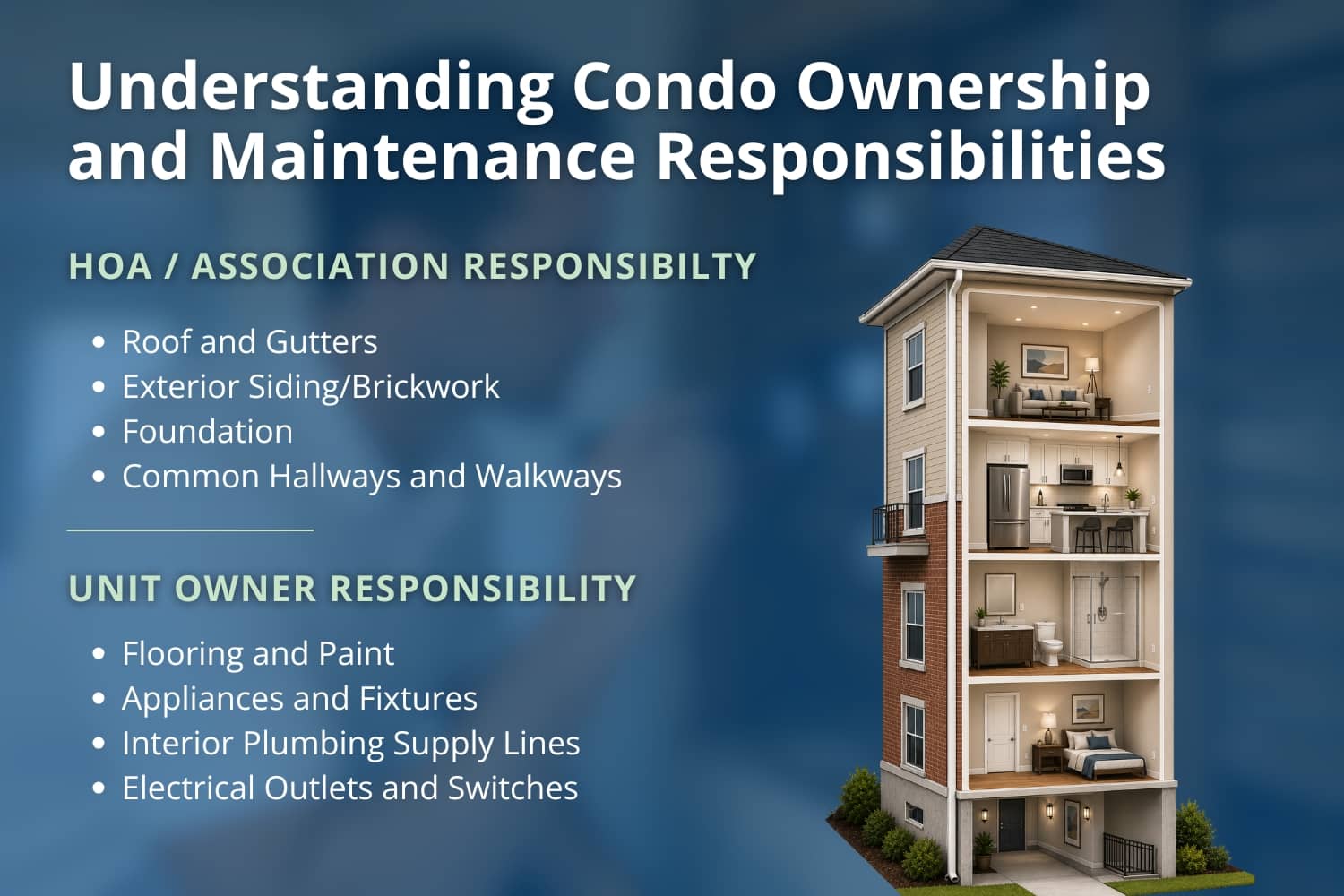
Your inspector directly examines your personal living area. However, they will also perform a visual scan of accessible shared common areas. These common spaces include shared basements, main utility rooms, entry hallways, walkways, and visible exterior sections of the roof and foundation.
If a main boiler in a shared basement is failing or the exterior masonry is deteriorating, every unit owner may eventually need to pay for a replacement through a special assessment fee. Identifying these shared risks early allows you to review association financial reserves and meeting minutes with your real estate team before closing.
A standard inspection covers the basics, but specialized testing provides deeper protection for Greater Boston properties. Older buildings and coastal weather conditions often require targeted diagnostic tools to catch hidden issues.
Infrared Thermal Imaging: Thermal cameras detect temperature differences behind walls and ceilings. This non-destructive technology highlights hidden insulation gaps, cold air drafts around window frames, and moisture pockets caused by active leaks from units above.
Radon Gas Testing: Radon is an odorless, naturally occurring gas that rises from the soil. Ground-floor and garden-level condo units in areas like Newton or Quincy are especially vulnerable. Radon testing measures indoor gas levels to ensure the space is safe for your family.
Indoor Air Quality Testing: Older heating ducts, damp common basements, or previous unaddressed water leaks can lower indoor air quality. Air quality testing measures airborne mold spores and common allergens, helping you breathe easier in your new space.
Termite and Pest Inspections: New England wood-frame structures can suffer hidden damage from carpenter ants, termites, and rodents. A targeted pest inspection identifies active infestations or structural damage caused by wood-destroying insects.
Water Quality Testing: Older city supply lines and vintage interior pipes can occasionally release heavy metals like lead into your drinking water. Testing your water supply ensures your drinking water meets current safety standards.
Adding these targeted services to your standard walk-through gives you complete confidence in your investment before closing.
Every property has minor cosmetic flaws, but certain inspection findings warrant extra attention during your purchase process.
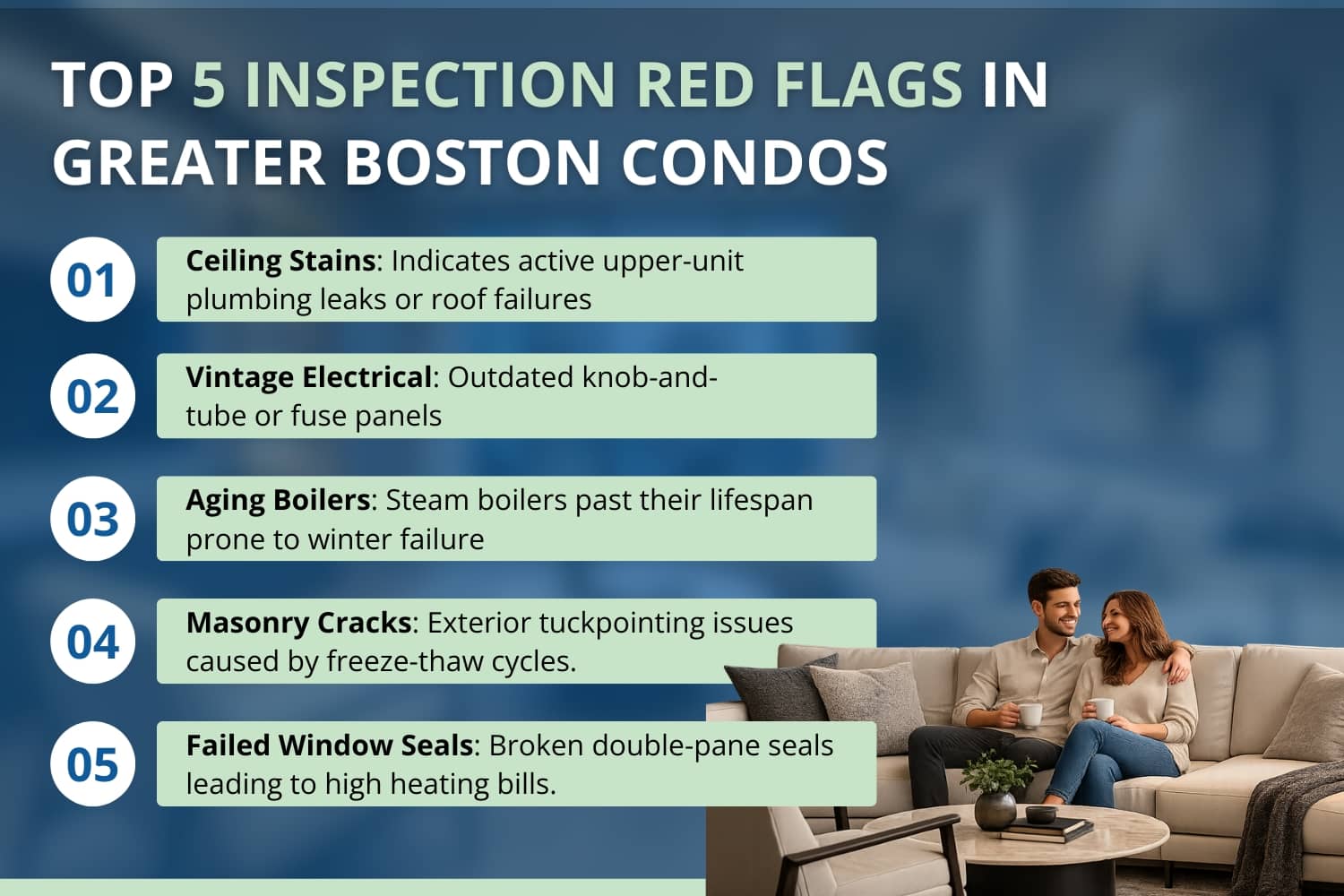
Water Stains on Ceilings: Stains on interior ceilings usually point to plumbing leaks from the unit upstairs or leaking common roof structures that need attention.
Outdated Electrical Panels: Historic multi-family conversions in Medford or Somerville may still contain outdated fuse boxes, ungrounded outlets, or knob-and-tube wiring concealed in walls.
Aging Heating Equipment: Steam boilers and older water heaters past their operational lifespan can fail without warning, resulting in costly emergency repairs.
Masonry and Tuckpointing Issues: Cracks in exterior brickwork allow water to enter the building frame during severe winter freeze-thaw cycles, leading to structural damage over time.
Failed Window Seals: Double-pane windows with broken seals allow cold winter winds to penetrate your space, driving up heating expenses during New England winters.
Identifying these issues early gives you power to ask the seller for repairs, request financial credits, or negotiate the final purchase price before signing final contracts.
Preparing for inspection day ensures the process runs smoothly and helps you get the most value from your inspector.
Request Access in Advance: Ask the seller or property manager to ensure the inspector has full access to common basements, attic spaces, main utility rooms, and roof hatches.
Attend the Inspection: Plan to walk through the unit with your inspector. Seeing items in person makes the final written report easier to understand and apply to your planning.
Prepare Your Questions: Write down any concerns you noticed during your initial walk-through, such as strange odors, sticky doors, or cold spots in specific rooms.
Bring a Notebook: Take personal notes during the evaluation so you can reference specific locations and maintenance tips discussed by your inspector.
Taking these simple steps beforehand helps you maximize your inspector’s time and gives you full confidence in your final report.
How does radon gas testing work during a property evaluation?
A standard radon test uses continuous monitoring equipment placed in the lowest livable space of a property for 48 hours. Because radon is an invisible, odorless gas produced naturally in soil, professional testing is the only reliable way to measure indoor concentrations and determine whether a mitigation system is necessary.
When should home buyers schedule an indoor air quality test?
Indoor air quality testing is recommended if a property shows signs of past water intrusion, lingering musty odors, or visible mold growth. Specialized air testing measures airborne mold spores, allergens, and volatile organic compounds to evaluate overall indoor air safety.
What hidden issues can infrared scanning detect behind walls?
Infrared thermal imaging detects subtle temperature differences across surfaces like ceilings, floors, and walls. This non-destructive diagnostic tool pinpoints hidden plumbing leaks, missing insulation gaps, and overheating electrical components without opening up drywall.
Why are termite and pest inspections necessary for New England homes?
Wood-destroying insects like carpenter ants and termites can cause structural damage long before visible warning signs appear on interior walls. A dedicated pest inspection checks timber framing, sill plates, and subflooring for active infestations, mud tubes, and structural wood rot.
Is water quality testing necessary for urban and suburban properties?
Yes, aging municipal water supply lines and legacy interior plumbing connections can leach heavy metals like lead or copper into drinking water. Water quality testing identifies chemical contaminants, bacteria, and mineral imbalances to help owners choose the right filtration systems.
You should contact a professional home inspector as soon as your offer to purchase the property is accepted. Most purchase contracts include a limited time frame for inspections and negotiations. Calling a licensed inspector early gives you plenty of time to schedule your walk-through, perform optional testing like radon screening, and review the detailed digital report with your agent.
Buying a condo is a major investment, and proper preparation helps protect your financial future. Working with an experienced local inspector gives you the knowledge and confidence you need to move forward smoothly with your purchase.
At R & C Inspectors, we provide comprehensive condo inspections across Newton, Waltham, Quincy, Medford, Somerville, and the greater Boston area. From thermal imaging to water quality testing, our team helps you protect your investment from day one.
Ready to inspect your prospective home? Contact R & C Inspectors today to schedule your comprehensive condo inspection.