
- Book your home inspection online today and save $25 on your next inspection! BOOK NOW!
-
 617-615-9559
 617-615-9559
Fill up the form and we will reach out to help you set up a suitable time slot for your property inspection.
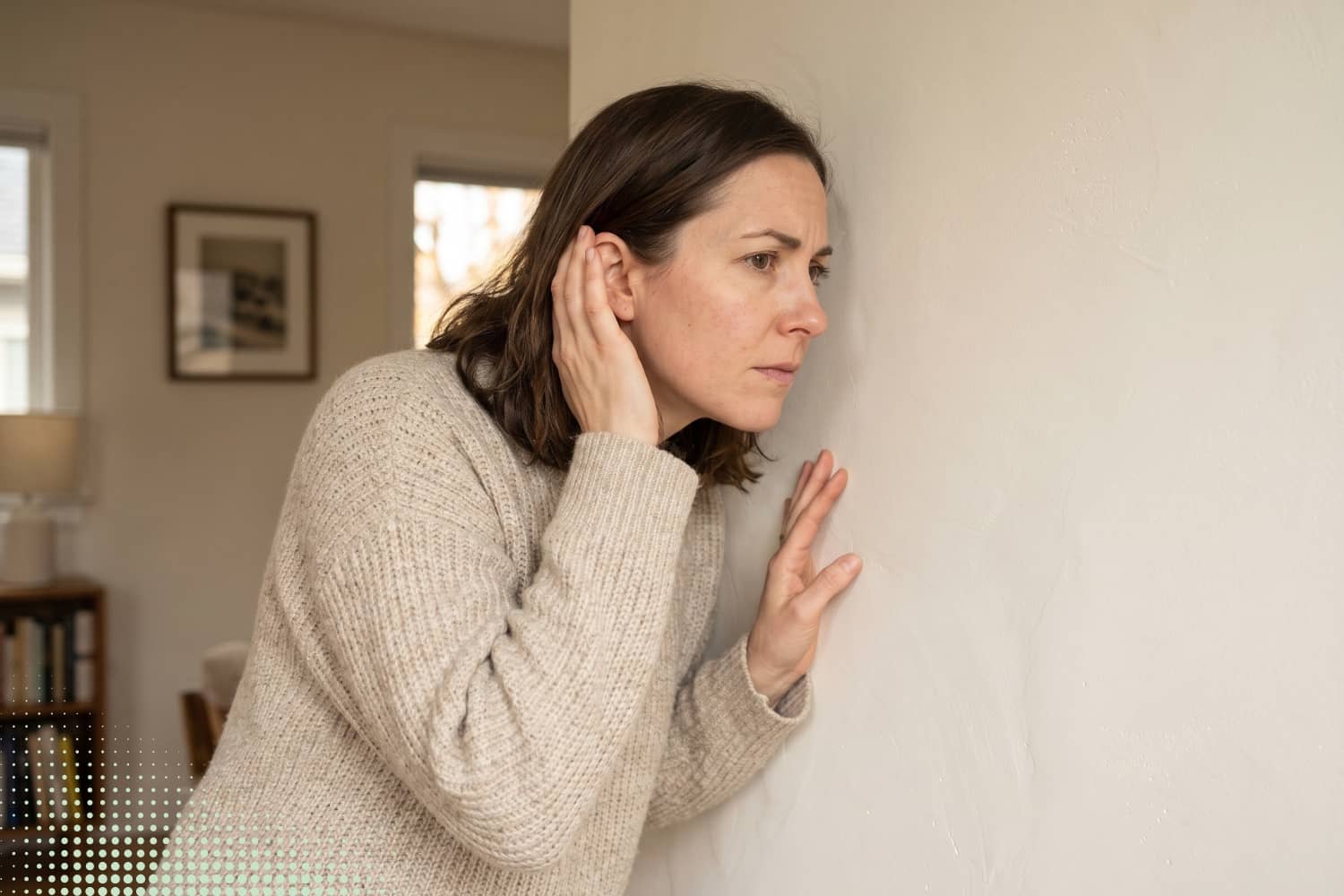
Once the nights turn cold across Greater Boston, many homeowners start to hear it. A faint scratch behind the bedroom wall. A soft scurry above the kitchen ceiling around midnight. Then quiet, and later the same sound again. If you’re hearing it too, this guide from R&C Inspectors will help you figure out what it means.
That sound often means mice in the walls. Mice move indoors in the fall to find warmth, food, and a safe place to nest. Older homes in Newton, Somerville, Medford, Quincy, and Waltham give them plenty of ways in and plenty of hidden space to live.
The good news is that you can usually confirm what’s going on without opening a wall. Here’s what to look for and what to do next.
The clearest signs of mice in walls are scratching or scurrying sounds at night, small dark droppings near baseboards or under sinks, and a musty, ammonia-like smell that won’t go away. If you notice two or more of these together, mice are the most likely cause.
Here’s why mice in the walls are worth taking seriously:
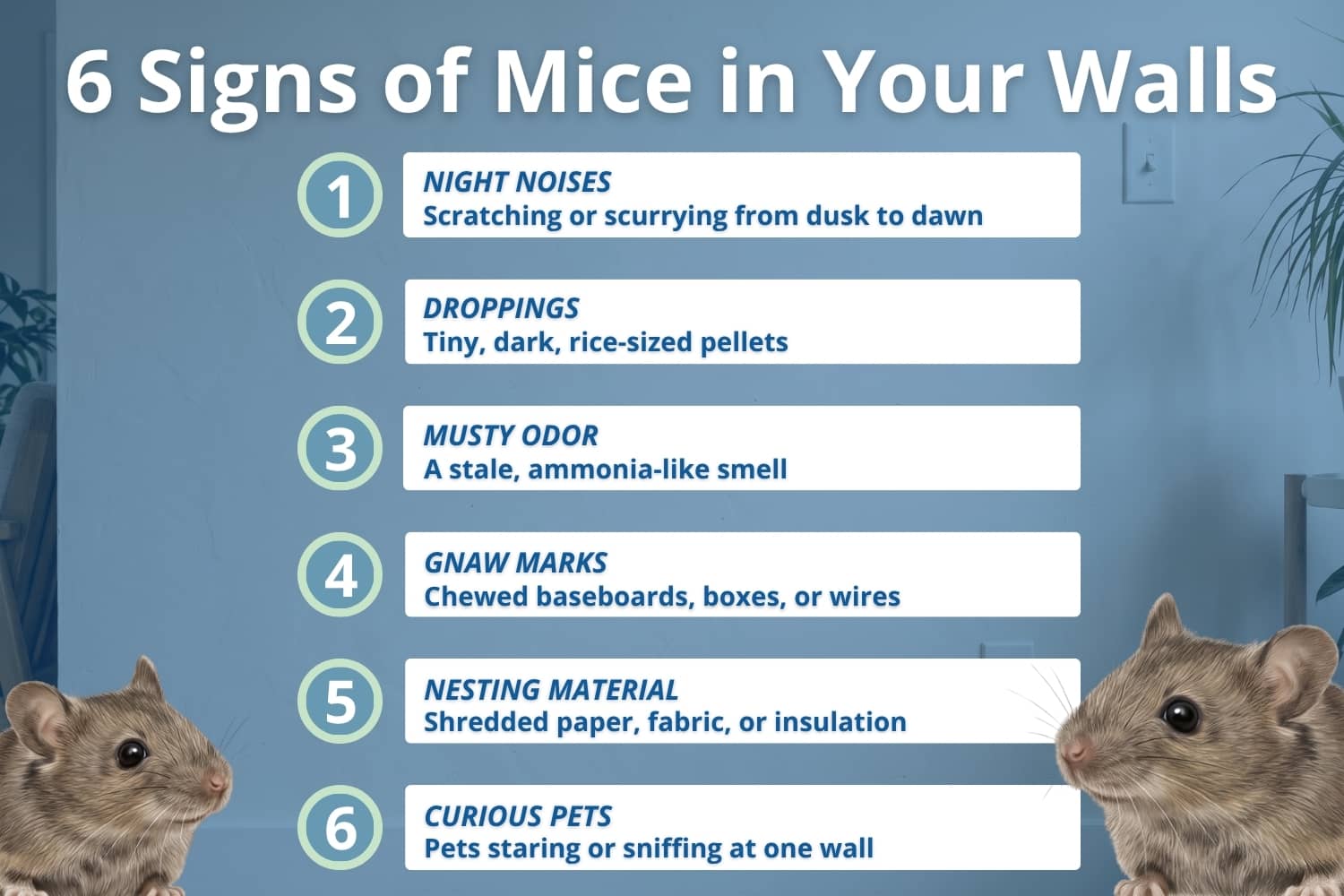
Not sure if what you’re hearing is mice? These six signs are the most common clues, and most homeowners notice two or three of them before they ever see a mouse.
Mice aren’t the only animals that make noise in walls. The time of day and the type of sound can help you narrow it down.
| Animal | When You Hear It | What It Sounds Like | Where It Usually Is |
|---|---|---|---|
| Mice | Night, from dusk to dawn | Light scratching, fast tiny feet | Walls, ceilings, under floors, cabinets |
| Rats | Night | Heavier thumps, louder gnawing | Basements, lower walls, crawlspaces |
| Squirrels | Daytime, early morning and late afternoon | Loud running, rolling, thumping | Attic, upper walls, soffits |
| Bats | Dusk and dawn | Squeaks, fluttering | Attic, chimney, upper walls |
If you’re seeing wood damage with no droppings, it may be an insect problem instead. A termite inspection or general pest inspection can help sort out the source.
Mice get into Boston-area homes because older houses have lots of small gaps, and a mouse only needs an opening about the size of a dime. Once cold weather sets in, they follow warm air and food smells straight to those gaps.
Our local housing stock makes this easier for them:
If you have mice in your walls, they have an entry point somewhere. Getting rid of the mice without finding it usually means more mice later. Our pest prevention tips cover how to seal many of these spots.
Because all of this happens out of sight, the repair bill is often the first real sign of how far things have gone, and it usually isn’t covered. Most standard homeowners insurance policies exclude rodent damage, since insurers treat an infestation as a preventable maintenance issue that builds up over time.
Chewed wiring, ruined insulation, and patched drywall typically come out of pocket. The exception is a fire: if mice chew through a wire and it sparks, the fire and smoke damage may be covered, but the rodent damage that caused it generally won’t be.
That makes finding the problem early the best way to keep costs down, and it’s one more reason to have the attic, basement, and crawl space looked at during a home inspection.
Because most of this damage hides behind walls, knowing how to find it without tearing into drywall makes a big difference.
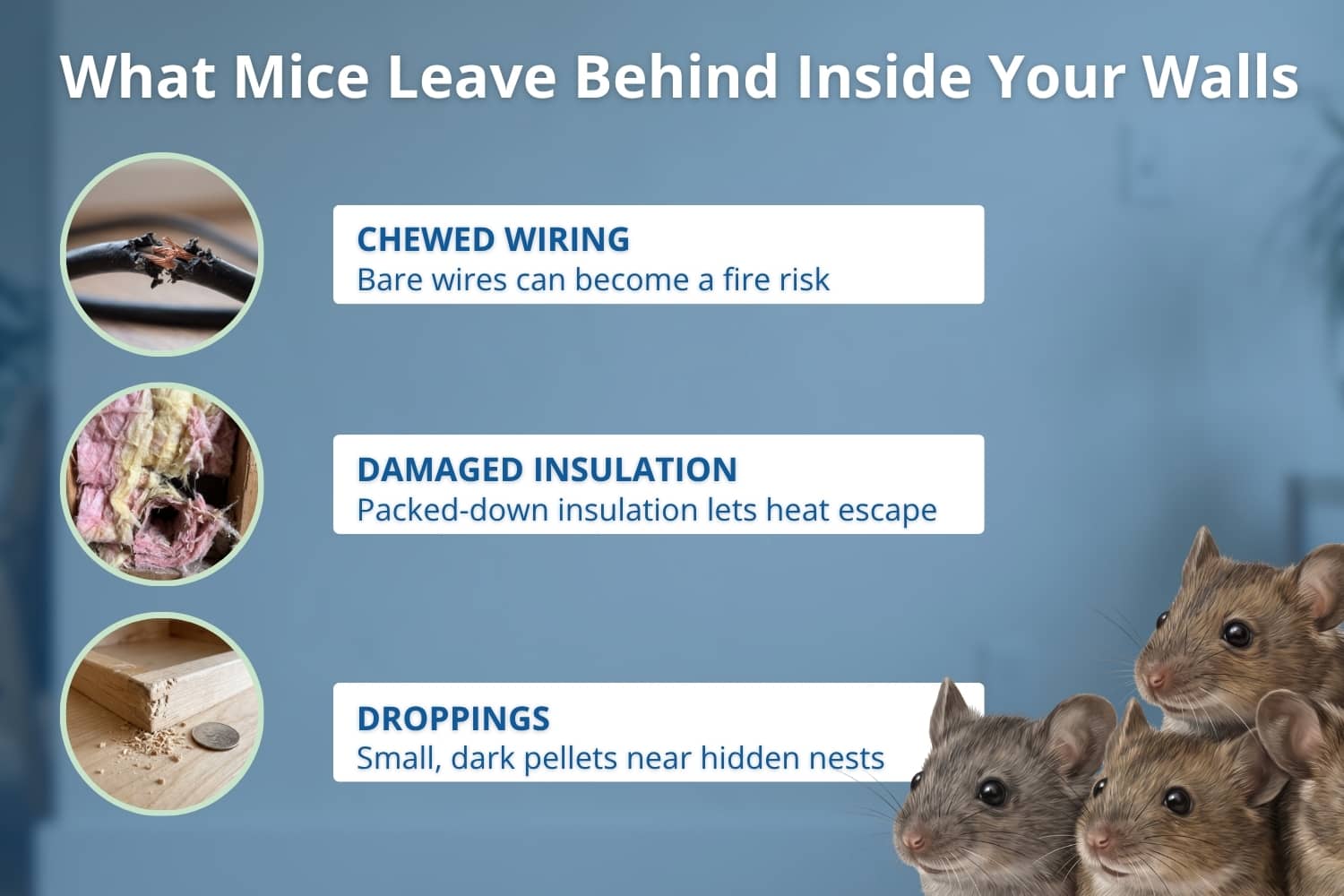
Most mouse damage happens where you can’t see it. Here’s what they tend to leave behind inside your walls, and why each one matters.
A trained inspector can often confirm mice in walls and find their entry points without cutting into drywall or plaster.
An inspector checks the places mice leave evidence: basements, attics, crawlspaces, under sinks, behind appliances, around the foundation, and along the roofline. They look for droppings, rub marks, nests, and outside gaps like foundation cracks, worn bulkheads, and open vents. Finding these spots helps keep the problem from coming back.
A thermal imaging camera reads surface temperatures and shows them as a color map. It doesn’t see through walls or show the mice themselves. What it can show is the effect of their activity on your home.
When insulation inside a wall has been packed down or pushed aside, that spot often shows up as a cold patch on an outside wall during the heating season. Damp areas can also show up cooler than the drywall around them. An inspector then uses a moisture meter to confirm whether a cool spot is actually wet.
Infrared scanning works best when there’s a big temperature difference between inside and outside, which makes late fall and winter in Greater Boston a great time to scan.
If you hear mice in your walls, start by confirming the signs, protecting your food, and finding where they’re getting in. Here’s a simple plan:
Acting on these steps early keeps a few mice from turning into a full infestation.
Mice in walls can affect a home sale. For buyers, a home inspection paired with a pest inspection can show past or current rodent activity and the damage it caused, so you can ask for repairs or a credit. For sellers, fixing entry points before listing helps avoid surprises during the buyer’s inspection.
Will mice in walls go away on their own?
Rarely. Once mice find warmth, food, and a nest, they tend to stay and breed. A small problem can grow fast through the winter, so it helps to know what to expect during a pest inspection before activity spreads.
Can mice in walls affect indoor air quality?
Droppings, urine, and nesting material inside walls and ductwork often lead to lingering odors. If you notice stale or musty smells you can’t trace, indoor air quality testing can help you learn what’s in the air in your home.
Is it mice or termites damaging my wood?
Mice leave rough gnaw marks and droppings. Termites leave mud tubes, hollow-sounding wood, and discarded wings. A termite inspection can rule termites in or out.
Do mice get into homes through the basement?
Often, yes. Foundation cracks, bulkheads, and pipe openings are common entry points. These same gaps can also let soil gases like radon into the home, which is one more reason to seal them and consider radon testing.
Call a professional when you’ve confirmed signs of mice and can’t find how they’re getting in, or when you suspect damage behind the walls:
A licensed pest control company handles removal. An inspection shows where the mice got in and what they damaged.
Mice in walls are a common fall problem across Greater Boston, but they don’t have to become a winter-long headache. The sooner you find the signs and the gaps that let them in, the less damage they can do.
If you want a clear answer about what’s happening inside your walls, R&C Inspectors can help. Our pest inspection looks for signs of activity and entry points, and our infrared scanning helps find insulation damage and moisture hidden behind walls. We serve homeowners in Newton, Waltham, Quincy, Medford, Somerville, and nearby towns. Reach out to schedule an inspection and get the facts you need to protect your home.