
- Book your home inspection online today and save $25 on your next inspection! BOOK NOW!
-
 617-615-9559
 617-615-9559
Fill up the form and we will reach out to help you set up a suitable time slot for your property inspection.
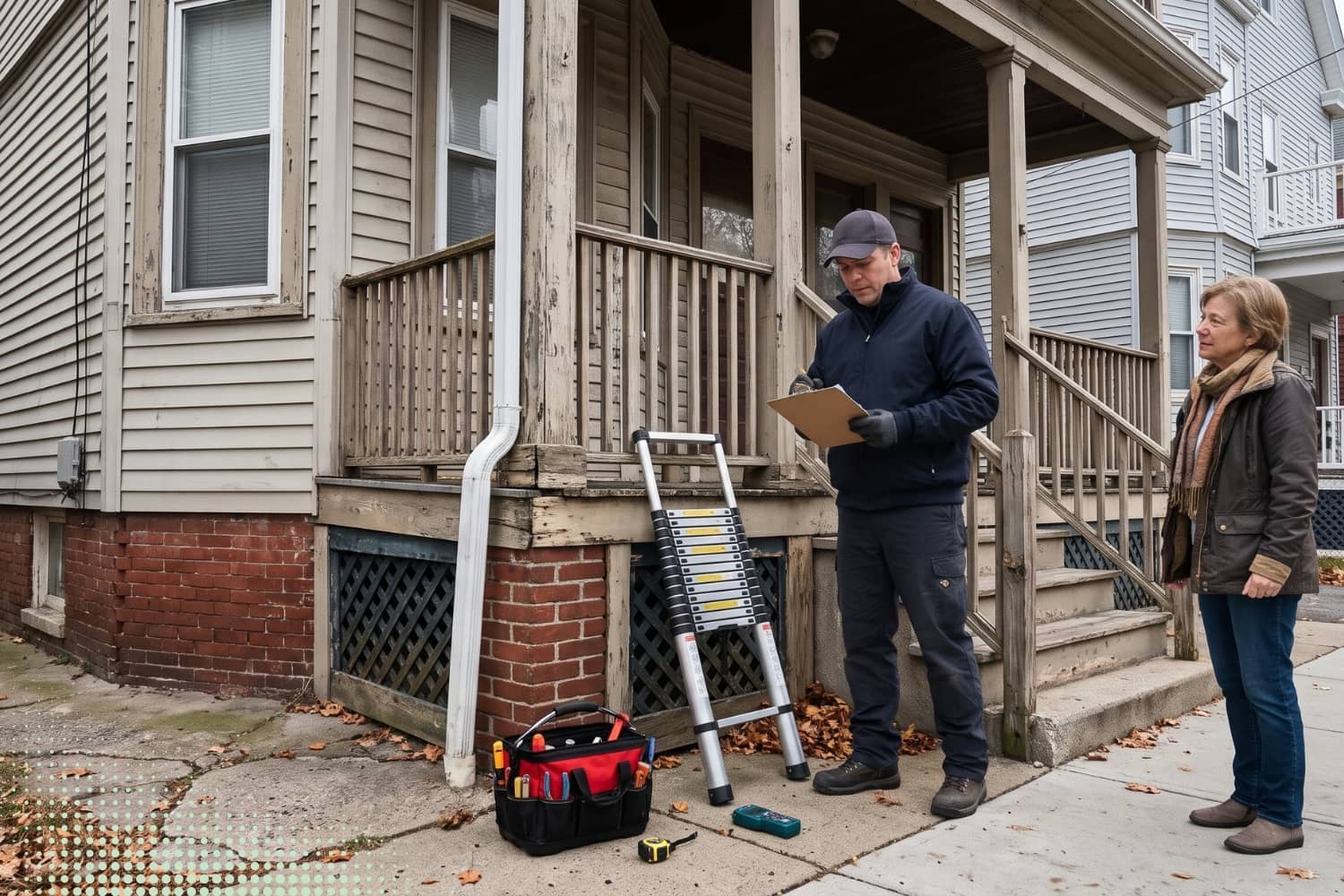
Most buyers know they need a home inspection. Fewer know what to ask for beyond the standard visit. A good home inspection checklist for buyers covers the roof, foundation, plumbing, electrical, and heating. But in Greater Boston, where many homes are 80 to 120 years old, the biggest surprises often sit outside that basic list. Radon in the basement, lead in the water lines, termites in a sill plate, or moisture hiding behind plaster won’t always show up in a quick walkthrough.
In this guide, the team at R&C Inspectors walks through what to add to your checklist so those issues don’t catch you after closing.
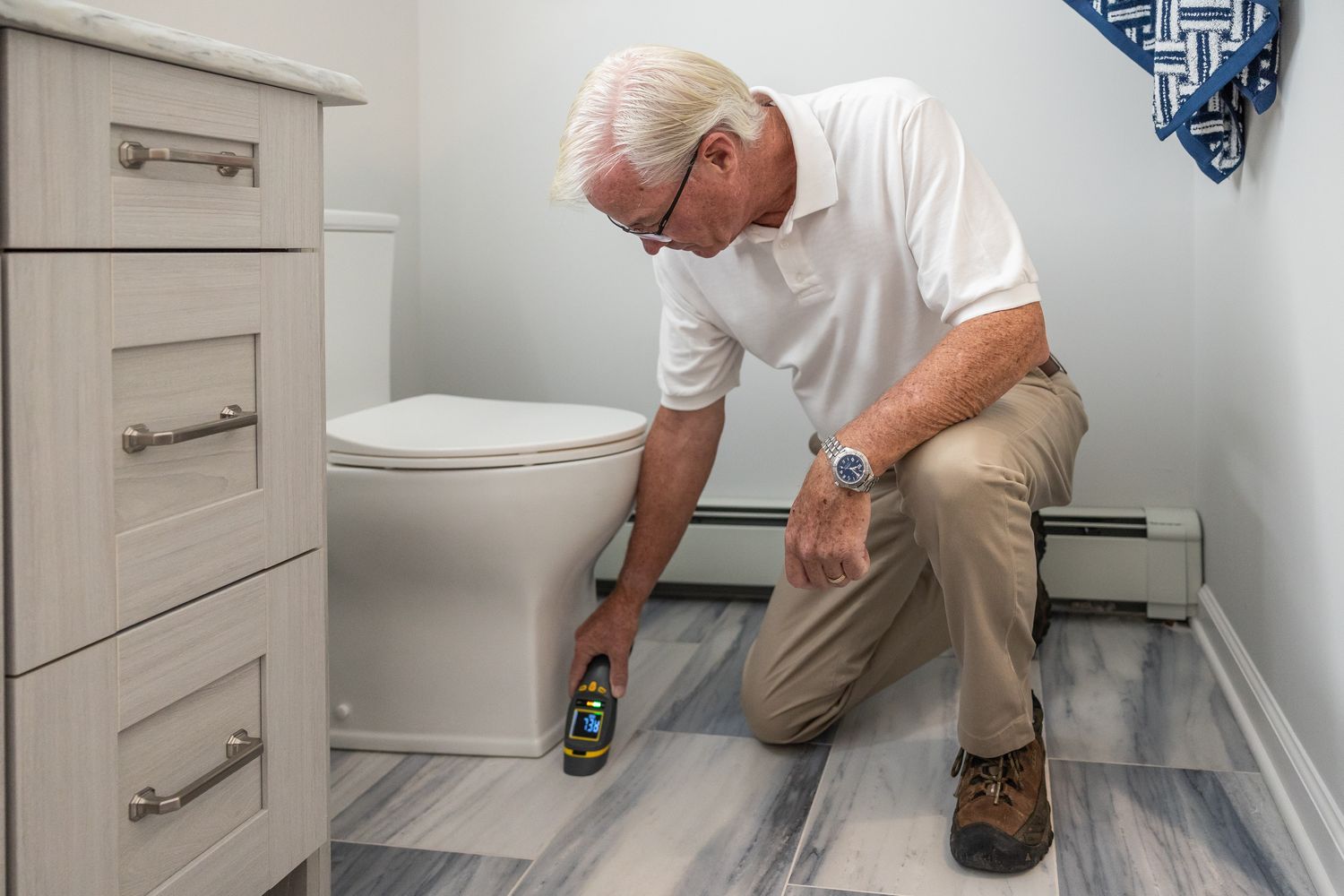
A standard home inspection is a visual check of a home’s major systems and structure. It does not look inside walls, dig up pipes, or run lab tests. That gap is where buyers tend to get caught off guard.
| Usually Included in a Standard Inspection | Usually Requires an Add-On Service |
|---|---|
| Roof, gutters, flashing, and chimney exterior | Radon gas testing |
| Foundation and visible structure | Water quality and lead testing |
| Electrical panel, outlets, and visible wiring | Termite and wood-destroying insect inspection |
| Plumbing fixtures, visible pipes, water heater | Pest inspection |
| Heating and cooling equipment | Infrared (thermal) scanning |
| Attic, insulation, and ventilation | Indoor air quality and mold testing |
| Windows, doors, floors, and walls | Sewer line camera inspection |
Knowing where the standard inspection stops helps you decide where your own checklist needs to keep going.
Before you add anything extra, make sure a licensed Massachusetts home inspector reviews these areas:
If any of these items look like trouble, your inspector will usually tell you whether it needs a closer look from a specialist.
The right add-on tests depend on the home’s age, location, and condition.
Radon testing is one of the most important add-ons for Greater Boston buyers. It is a colorless, odorless gas from soil and rock that seeps into basements through cracks. Long-term exposure is a leading cause of lung cancer in non-smokers.
The EPA recommends fixing a home if radon levels reach 4 picocuries per liter (pCi/L) or higher. A short-term test runs for at least 48 hours, which fits inside a typical inspection window. If levels come back high, a mitigation system is usually a fixable problem and a fair point to negotiate.
Most homes in Newton, Waltham, Quincy, Medford, and Somerville get treated public water. The risk often starts at the property line, in old service lines and indoor plumbing. Homes built before the mid-1980s may have lead solder, and some older homes still have lead service lines.
Water quality testing checks for lead, copper, bacteria, and other contaminants. It’s especially worth doing if you have young children or the home has original plumbing.
Eastern subterranean termites are active across Massachusetts. They live in the soil and feed on wood that touches or sits near the ground, like sill plates, porch posts, and basement framing.
A termite inspection looks for mud tubes, damaged wood, discarded wings, and conditions that invite termites. Spring swarms are the most visible sign, but damage can happen year-round behind finished walls.
A general pest inspection looks for mice, rats, carpenter ants, and other common invaders. In older Boston-area homes, small gaps around foundations, utility lines, and old windows give pests easy access. Fall and winter are peak seasons for mice moving indoors.
Droppings and chewed wiring are easy to miss during a showing.
Infrared scanning uses a thermal camera to show temperature differences behind walls, ceilings, and floors. It can reveal hidden moisture, missing insulation, air leaks, and overheating electrical parts. It’s especially useful in homes with fresh paint, finished basements, or recent renovations, where cosmetic updates can hide old water damage.
Indoor air quality testing checks for mold spores, volatile organic compounds (VOCs), and other airborne concerns. Consider it if the home smells musty, has a history of water problems, or has a finished basement. It’s also helpful for buyers with asthma or allergies.
You don’t need every test on every home, but skipping the ones that fit your property is a risk that’s hard to undo after closing.
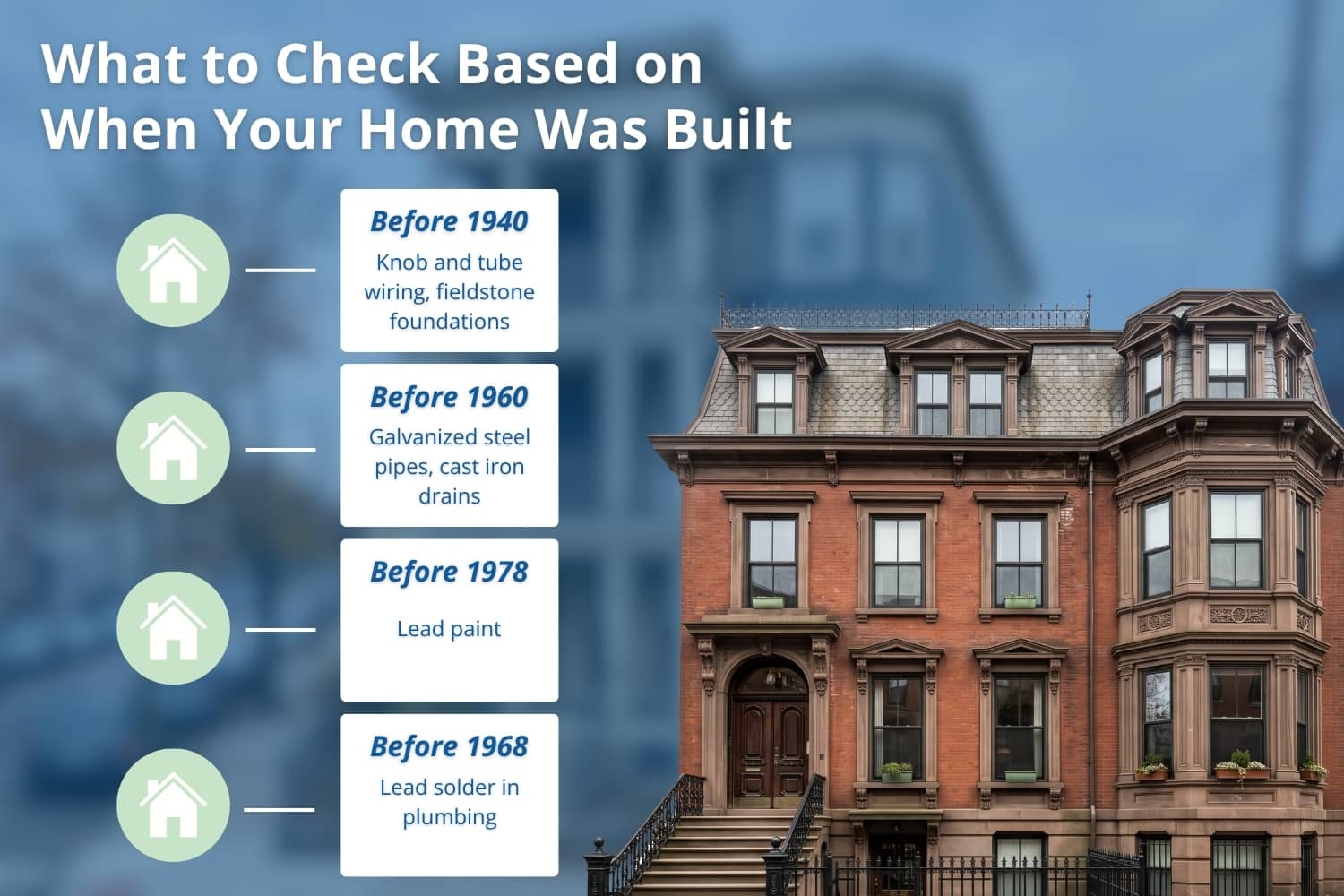
Add these items to your checklist if the home was built before the 1960s.
The older the home, the more these items should shape which add-on tests you choose.
Newton. Large Victorians and colonials on wooded lots mean damp roofs and tree roots near sewer lines. Big, finished basements are a good fit for radon testing and infrared scanning.
Waltham. Older worker homes near Moody Street sit alongside newer builds and condos. Homes near the Charles River deserve a close look for basement moisture and grading.
Quincy. Coastal neighborhoods like Wollaston, Squantum, and Houghs Neck deal with salt air and flood risk. Check for corrosion on exterior metals and HVAC equipment, and ask about flood zone status.
Medford. Homes near the Mystic River and in older areas like West Medford often have original plumbing and fieldstone foundations. Water testing and moisture checks are smart picks here.
Somerville. Triple-deckers and condo conversions often share systems and sit on tight lots. Pest and termite checks matter, and condo buyers should confirm what the association covers.
Knowing your town’s common issues helps you choose add-ons with purpose instead of guessing.
Your checklist isn’t just for the inspector. These steps help you get the most out of the visit.
Before: Book as soon as your offer is accepted, since Massachusetts inspection contingencies are often short. Decide which add-on tests fit the home, and make sure the basement, attic, and electrical panel will be accessible.
During: Plan to attend. A full inspection usually takes 1.5 to 3 hours. Ask questions, take notes and photos, and learn where the main water shutoff and electrical panel are.
After: Read the full report, not just the summary. Sort issues into safety concerns, major repairs, and routine upkeep. Get estimates for big items, then talk with your agent about asking for repairs, credits, or a price change.
A clear plan for each stage keeps the inspection from feeling rushed or overwhelming.
Who pays for the home inspection?
In most Massachusetts sales, the buyer pays. The inspector works for you, and the report is yours.
Can you inspect a home in winter?
Yes. Winter is a great time to test the heating system and run a radon test with the house closed up. Snow can limit roof views, and central air often can’t be tested safely in cold weather.
How do you test for lead in drinking water?
A lab test of water drawn from your taps is the most reliable way to know. Results show whether lead is present and at what level.
Should you get a sewer scope?
If the home is older or has large trees near the sewer line, a camera inspection can find cracks, roots, and blockages before they become expensive backups.
Some findings are a clear signal to bring in a specialist before you close. Call a professional if your inspection reveals:
Your inspector can tell you which issues need a second opinion. It’s much easier to sort these out during your contingency period.
When in doubt, get the expert opinion before you sign, not after.
The right home inspection checklist for buyers starts with the basics, then adds the tests that fit the home’s age, location, and history.
R&C Inspectors serves buyers across Newton, Waltham, Quincy, Medford, Somerville, and surrounding communities. Our team offers full home inspections plus radon gas testing, water quality testing, termite and pest inspections, infrared scanning, and indoor air quality testing. When you’re ready, schedule your inspection and buy with a clear picture of what you’re getting.